
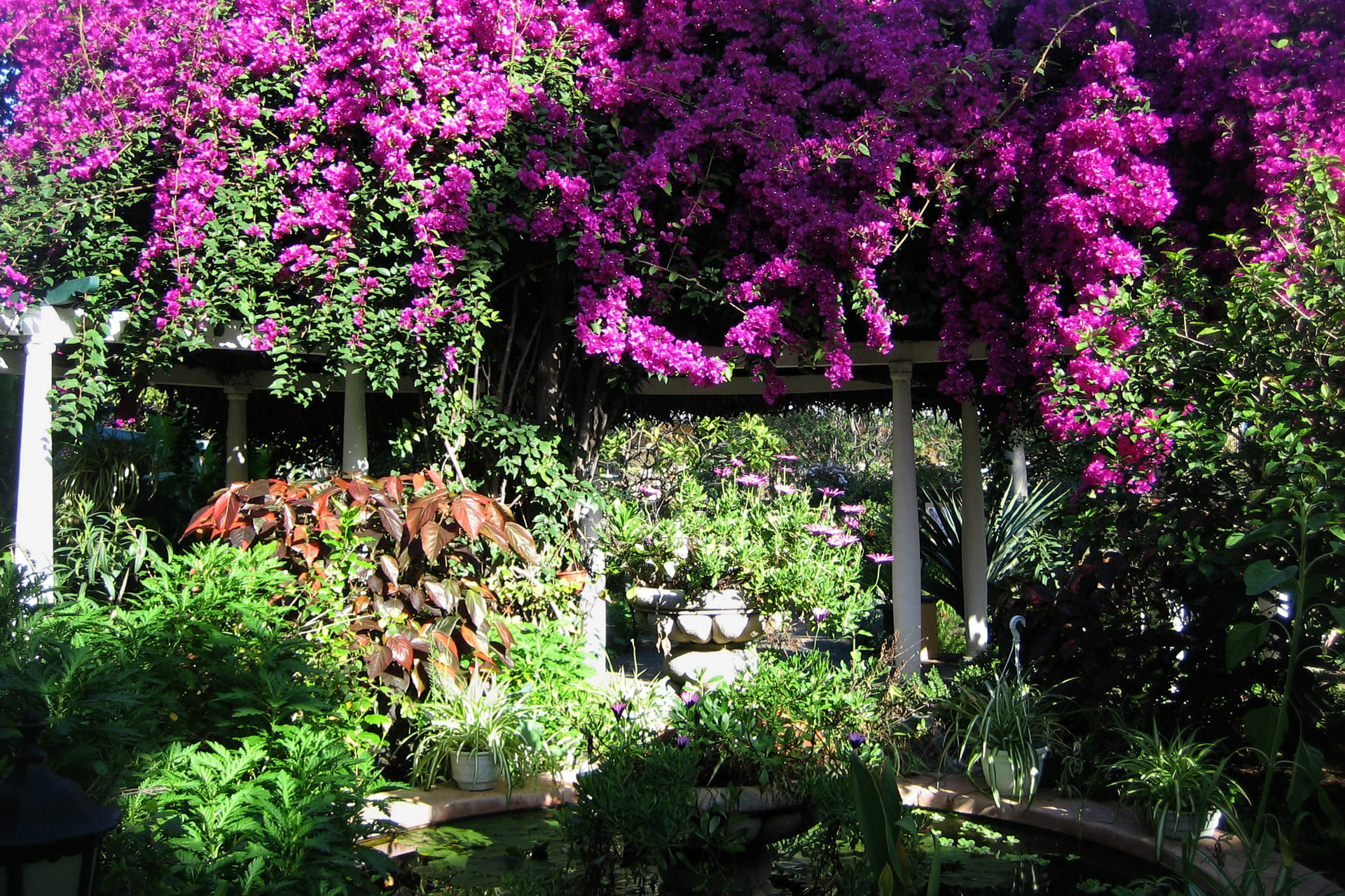
Step through the gate at Sitio Litre and the busy streets of Puerto de la Cruz soon feel far away. The water-lily pond and koi carp pond sit side by side; beyond the ponds lie lawns, an Agatha Christie area and an art gallery. From there, a ramp or steps lead to more of the garden: Humboldt’s lawn, the old croquet lawn, Marianne North’s terrace, orchids, lovebirds and a magnificent dragon tree. Come for the flowers and the quiet corners, then stay for a coffee or a leisurely meal at Café Orquídea. The garden is open to visitors; the historic house is private.
Sitio Litre at a glance
Where: Camino Sitio Litre, a short uphill walk from central Puerto de la Cruz. The walk: two adjacent ponds, the Agatha Christie area and art gallery on the upper level; steps or a ramp to the Humboldt and croquet lawns, Marianne North terrace, orchid walk, lovebirds and dragon tree. Access: almost all of the garden can be visited in a wheelchair, but old stone paths and raised tree roots make some stretches uneven. Garden hours: 9:30am–2:30pm, except Tuesdays in June, July and August. Entry: €4.75 general, €3.75 for residents/nationals; children aged 4–12 half price. Check current arrangements before travelling.
From the ponds into the garden
The ponds make a lovely introduction to Sitio Litre. Water lilies float beside the koi carp, whose bright colours catch the eye as they turn beneath the surface. Beyond the water, lawns give the garden room to breathe, while the Agatha Christie area and art gallery offer stories and artwork to linger over.
From there, the paths lead down through a greener, more open part of the garden. Look for the lawn and bust commemorating Alexander von Humboldt, the old croquet lawn and the Marianne North terrace. Orchids reward a closer look, and the lovebirds add their chatter to the walk. At the end of the café terrace, the old dragon tree makes a wonderful companion to a coffee or tea: take a seat and admire its great branching crown before you leave.
The water-lily pond and koi carp pond
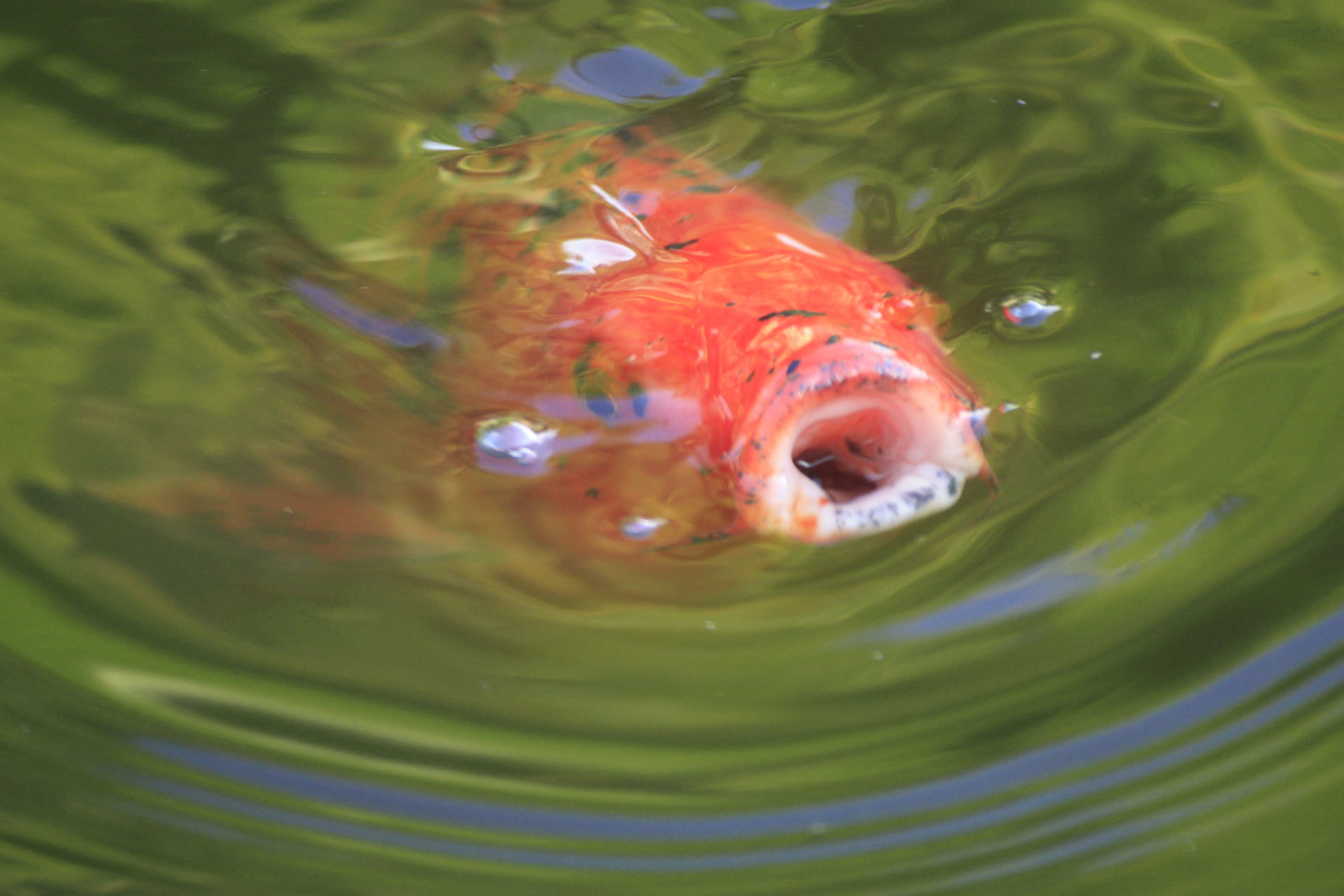
The water-lily pond and koi carp pond sit side by side, making this a lovely first place to pause. Watch the bright koi gather and turn through the water, then notice the leaves and flowers floating beside them. Beyond the ponds lie lawns and the places connected with Agatha Christie and the garden’s art.
If you would like to feed the carp, ask at the entrance whether feeding is allowed that day and use only food supplied or approved by the garden. Watching them is just as enjoyable, especially if you give yourself a few quiet minutes rather than rushing on.
The Agatha Christie area and art gallery
The Agatha Christie area and art gallery are on the same level as the ponds. Take a look before heading down the steps or ramp: Sitio Litre’s garden was part of Christie’s visit to Puerto de la Cruz in 1927, remembered by the family who lived here. She travelled with her daughter Rosalind, stayed at the Gran Hotel Taoro and found inspiration for The Man from the Sea in the La Paz coastline.
Our Agatha Christie article follows that visit in detail. You can also watch Ramón Michán’s Agatha Christie walking tour to see the places around town.
Down to Humboldt’s lawn and the croquet lawn
From the upper level, follow the steps or ramp down. The lawn on the left bears Alexander von Humboldt’s name, and a bust commemorates the evening he spent in Mr Little’s garden in 1799. Humboldt had been exploring Tenerife’s landscapes and plants with Aimé Bonpland; here he enjoyed a St John’s Eve gathering above the old port. Read the fuller story in our Alexander von Humboldt article.
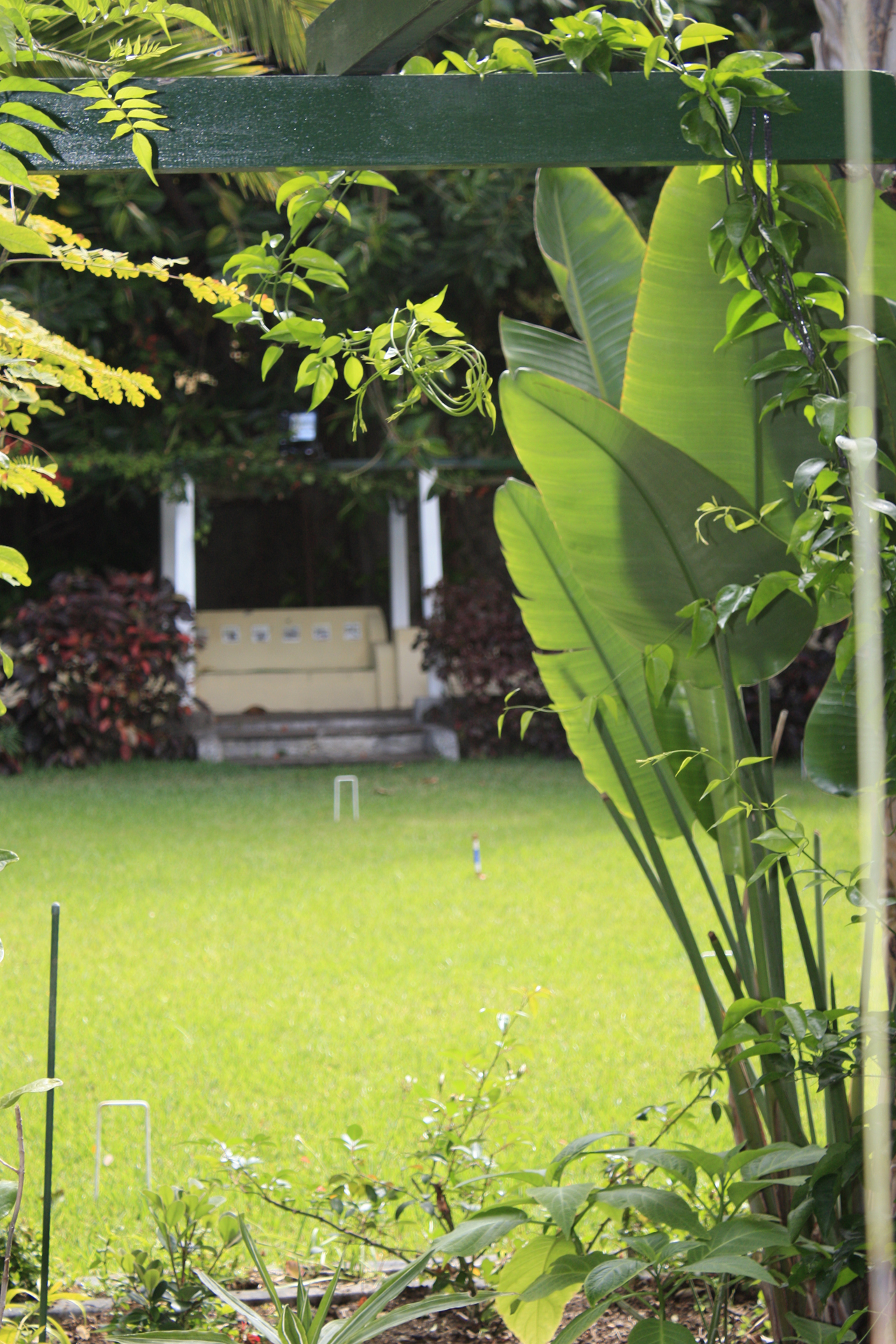
On the right lies the croquet lawn, another reminder of the families who made the garden a place to spend time outdoors. The two lawns give this part of Sitio Litre an open, restful feel after the ponds and gallery. Look around before moving on; the terrace and smaller paths offer more to discover.
Marianne North’s terrace and garden paintings
Seek out the Marianne North terrace as you explore the lawns. North stayed at Sitio Litre for around two months in 1875 and painted plants, the old dragon tree and views of the garden. Reproductions of her paintings make this a particularly satisfying place to linger: compare the shapes of the trees and the slope of the garden with the scenes she chose to paint.
Her original works are held by the Royal Botanic Gardens at Kew. Our Marianne North article explores her stay and the Tenerife paintings in more detail. You can enjoy the terrace without knowing her work beforehand; the garden makes the introduction for you.
The orchid walk and lovebirds
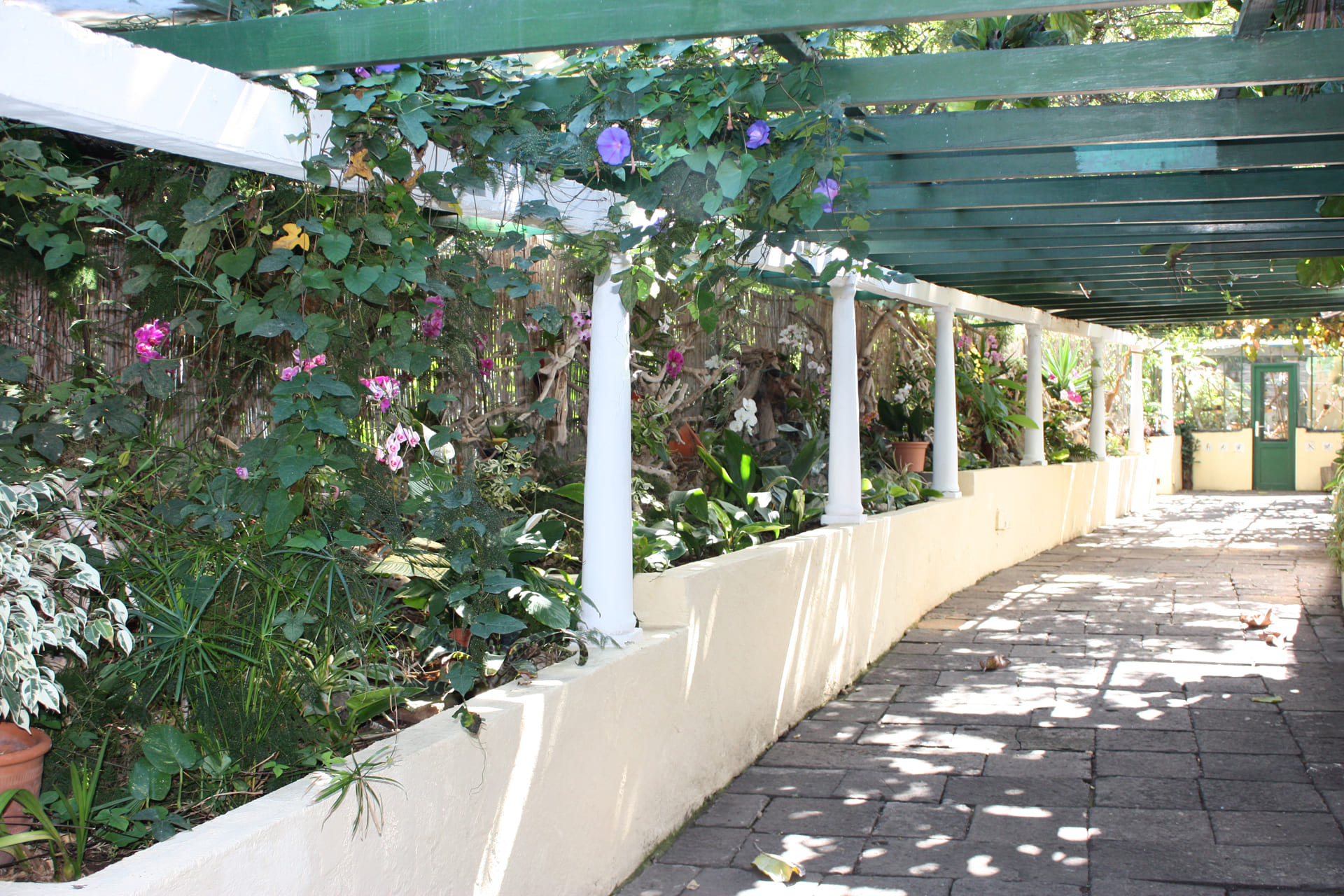
The orchid walk invites you to slow down and look closely. Flowers change with the season, and some blooms are small enough to miss if you hurry. Notice their colours and markings, then enjoy the shade and planting around them. Sitio Litre feels like a living garden, not a fixed display, so there is always something different to see.
Listen and look for the lovebirds as you wander. Along with the ponds and open lawns, they give the walk a lively rhythm. If orchids are the main reason for your visit, ask what is flowering before you travel; otherwise, let the garden surprise you.
The old dragon tree
The Canary Island dragon tree (Dracaena draco) is one of Sitio Litre’s most memorable sights. Its thick trunk and branching crown look wonderful against the old house and the garden’s smaller plants. Pause long enough to take in its shape from more than one angle. The tree also appears in the garden’s art. Marianne North painted a dragon tree here during her 1875 stay. Her story is closely tied to this particular garden.
How Sitio Litre became a garden with a story
The old harbour below Sitio Litre once connected Puerto de la Cruz with merchants and ships from northern Europe. A home and garden above the port offered room to grow plants and welcome visitors. The house dates from the early eighteenth century, and Archibald Little bought the property in 1774. His name gradually became Litre in local use.
Over the generations the garden acquired new paths, terraces and planting. It has the warm feel of a place people have lived in and cared for, with stories to discover as you wander rather than a history you have to study before coming.
The house, terrace and old stone paths
The historic house is a private residence, but it remains part of the view from the garden. Its galleries and older working spaces hint at the life of a merchant household. The open lawns, terrace and stone paths give you different ways to enjoy the setting without entering the house.
Most of the garden can be explored in a wheelchair, with a ramp available between the levels. The stone paths are centuries old, and tree roots have lifted some sections, leaving uneven patches. Take care on these stretches and choose the gentler route that suits you. If you need details for a particular wheelchair or mobility aid, contact the garden before visiting.
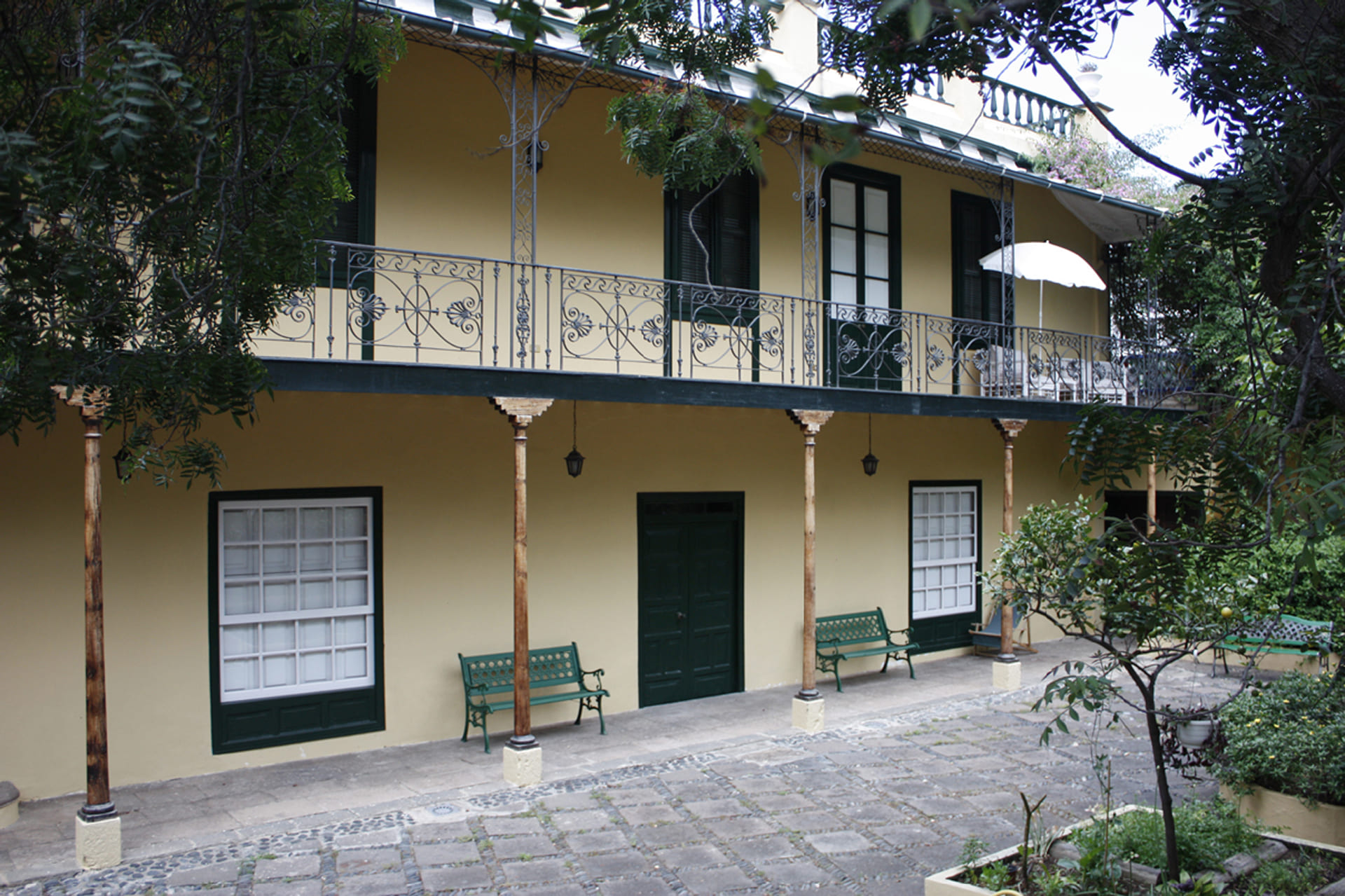
How Little became Litre: the merchant families
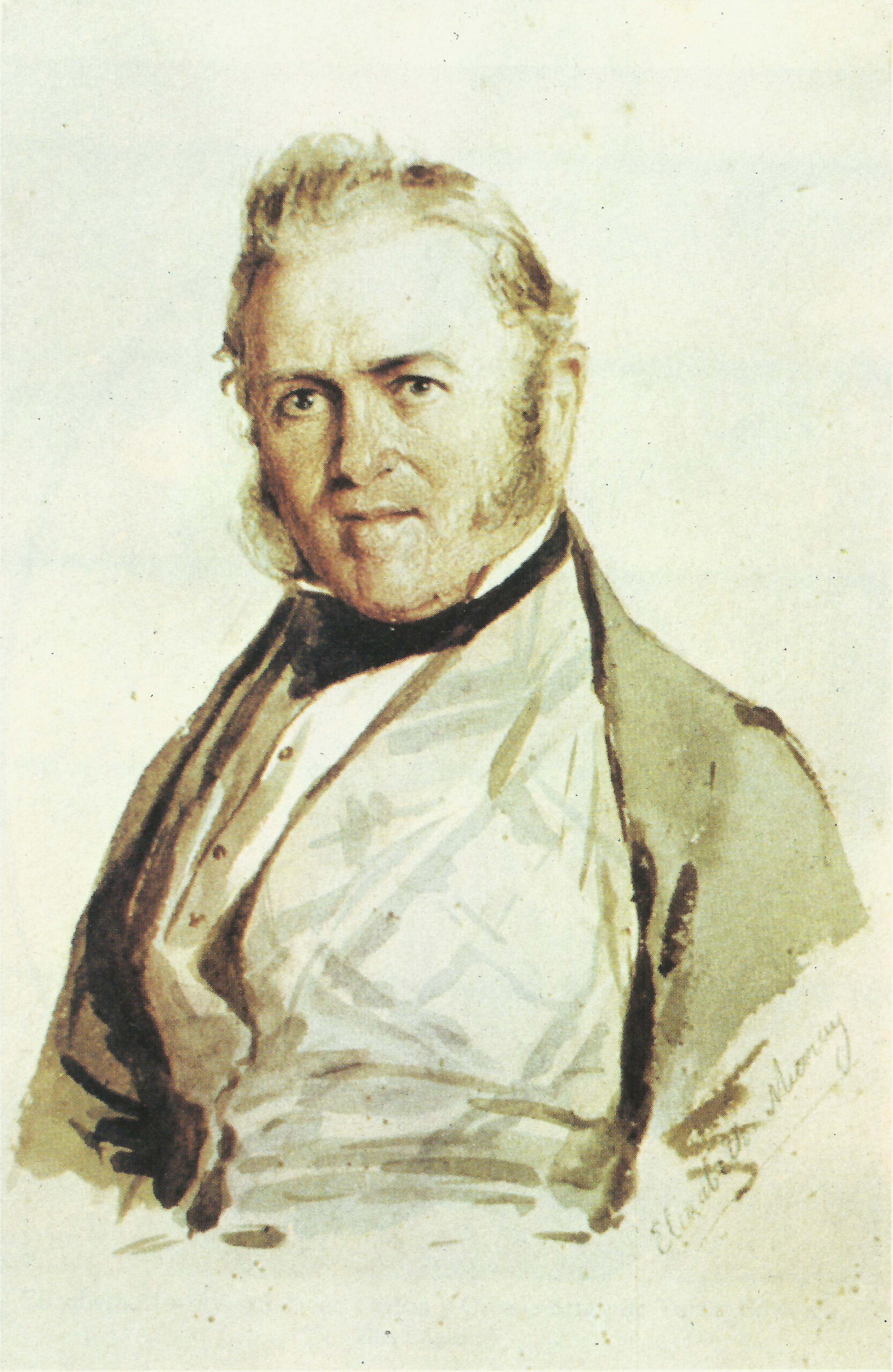
Archibald Little bought Sitio Litre in 1774 and gave the place its name. He and his family belonged to the merchant community connected with the port. The garden became a welcoming stop for travellers as well as a private family space.
Charles Smith bought the property in 1856, and the Smith family kept it until 1996. That long history helps explain why the garden has more than one character: terraces, lawns, flowering corners and old trees grew together over time.
Alfred Diston and the life of the garden
Alfred Diston lived for many years in Puerto de la Cruz and had close ties with the Little family. An artist and businessman with a keen interest in plants, he also worked with the nearby Botanical Garden. Sitio Litre is one of the places where his love of art and growing things meets the town’s history.
You can follow that connection in our Alfred Diston article and read how bananas changed the surrounding landscape in our history of bananas in Tenerife and Puerto de la Cruz.
Piazzi Smyth and other guests
The garden welcomed visitors with very different interests. Charles Piazzi Smyth came to Tenerife in 1856 to see whether clearer mountain air could improve astronomical observations. Sitio Litre was a stop in his journey; his telescopes went much higher, towards Teide. Read about the expedition and Jessie Duncan’s part in it in our Charles Piazzi Smyth article.
Humboldt, Marianne North, Diston, Piazzi Smyth and Christie did not all come for the same reason. Walking the garden lets you meet their stories in the places they knew while enjoying the orchids, water and shade for yourself.
Sitio Litre tickets, opening hours and directions
Sitio Litre is at Camino Sitio Litre, s/n, 38400 Puerto de la Cruz. From the centre, walk uphill from Calle Valois; allow around 10 minutes or longer at a gentler pace. The historic house remains private, while the garden and Café Orquídea welcome visitors.
The published garden hours are 9:30am–2:30pm, with both garden and café closed on Tuesdays in June, July and August. Standard garden admission is listed as €4.75 for adults, €3.75 for residents or Spanish nationals, and half price for children aged 4–12. Check current hours and prices before setting out.
Almost all of the garden is accessible by wheelchair, and a ramp offers an alternative to the steps between levels. Some historic stone paths are uneven where tree roots have lifted them. Move carefully and contact the garden if you need to check a particular route or mobility aid.
Stay for Café Orquídea
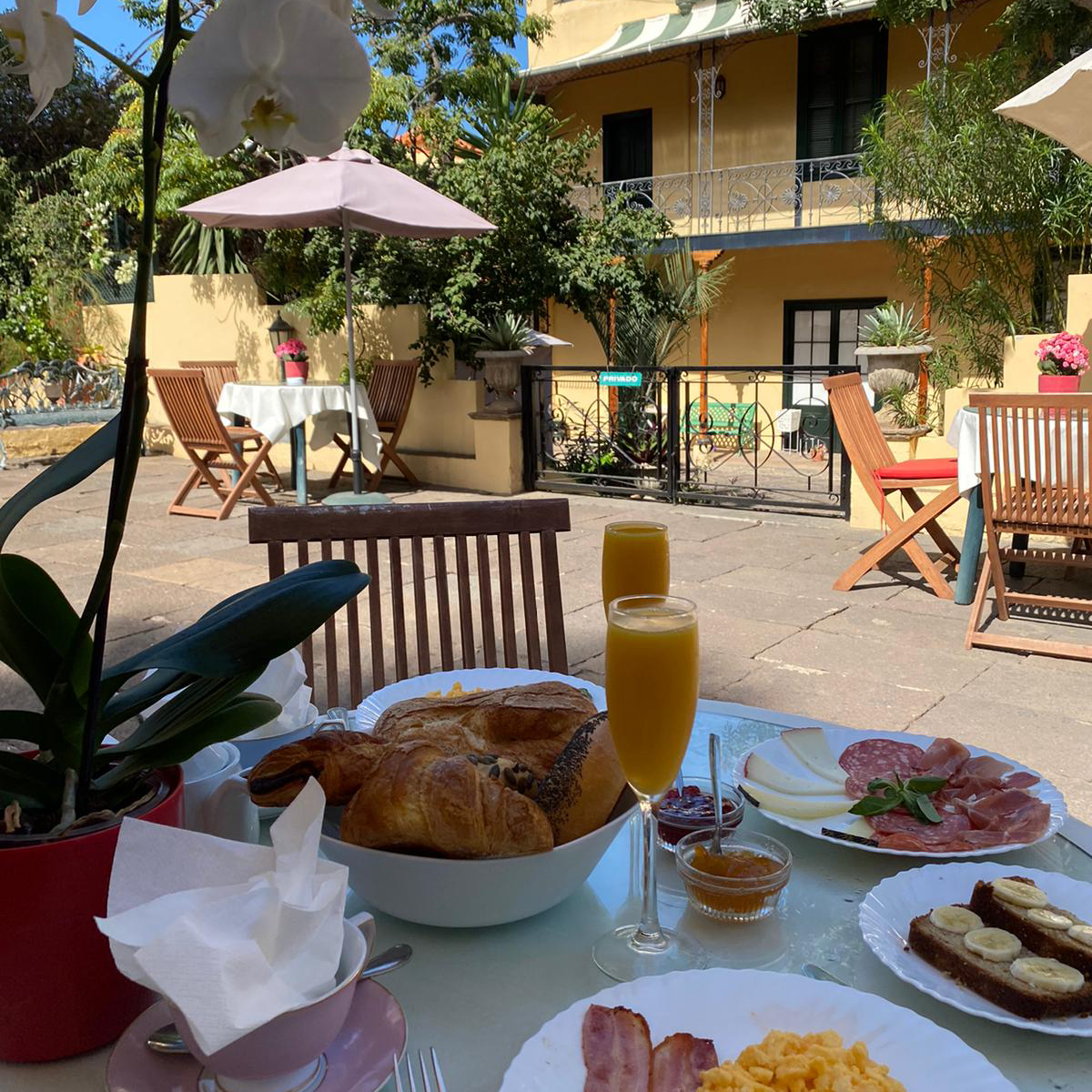
Café Orquídea deserves time of its own. Sit among the greenery with a coffee or tea, try a smoothie, or choose something from the regular menu. The café serves its normal menu during garden opening hours, and you do not need to book ahead just to order from it. This is a pleasant place to pause before another lap of the garden or to finish your visit slowly.
The café also offers brunch and afternoon tea. Garden admission is included with either booked experience. Arrange those special menus with the café in advance; the regular walk-in menu is separate. The café normally opens daily alongside the garden, with the same summer Tuesday closure. Our Café Orquídea visit gives a sense of the relaxed setting; ask the café about its current menu when planning a visit.
See Sitio Litre on Ramón Michán’s historic gardens walk
For a wider look at the garden’s place in Puerto de la Cruz, join local guide Ramón Michán on the historic gardens and plazas tour, part two. He begins at Sitio Litre and follows the greenery into the old town. Our complete historic gardens walk joins both parts, from Taoro to the port.
Explore the people and places connected with Sitio Litre
- Alexander von Humboldt at Sitio Litre and on Teide
- Marianne North and the garden she painted
- Alfred Diston in Puerto de la Cruz
- Charles Piazzi Smyth and Tenerife’s skies
- Agatha Christie’s Puerto de la Cruz visit
- How bananas shaped Tenerife and Puerto de la Cruz
- Historic gardens walk with Ramón Michán
- Café Orquídea: our visit
- More Puerto de la Cruz history
Follow PuertoDeLaCruz.info in Google
If our Puerto de la Cruz guides are useful to you, you can add PuertoDeLaCruz.info as one of your preferred sources in Google.