
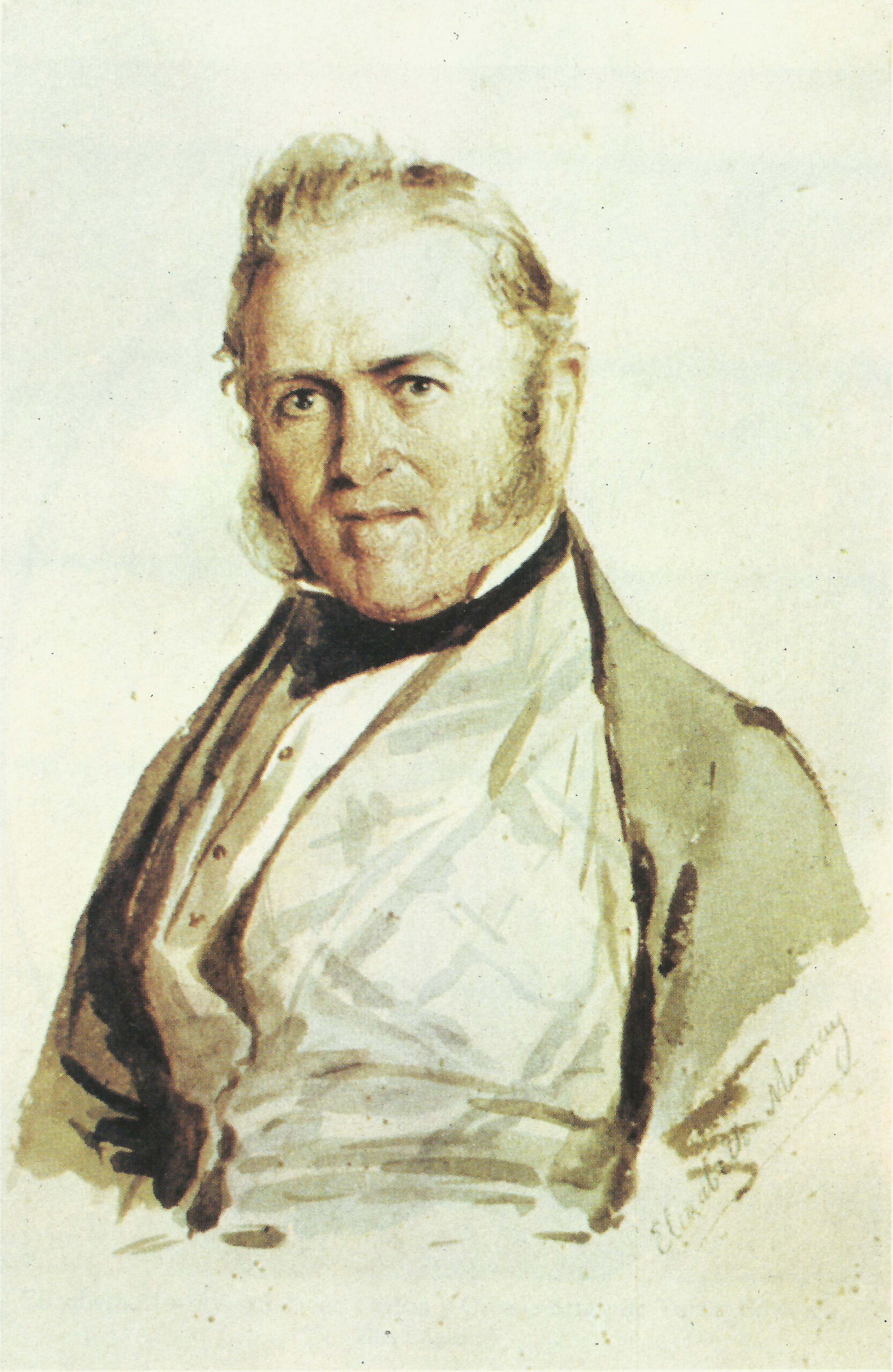
Alfred Diston arrived in Puerto de la Cruz as a young British wine merchant in 1810 and spent much of the next half-century looking closely at his adopted home. He drew the people he met, their clothes, the coast and the gardens; he kept notes on the island's life and plants. His story connects Sitio Litre, the Botanical Garden, the old harbour and La Chercha, the English Cemetery. The surviving watercolours let us see a nineteenth-century Puerto de la Cruz through his eyes.
Alfred Diston at a glance
Life: 1793–1861. From: Lowestoft, Suffolk, England. In Puerto de la Cruz: arrived in 1810 to work for the wine merchants Pasley, Little & Co.; lived in the town for decades. Remembered for: watercolours and notes on Canarian dress, daily life, landscapes and plants; work connected with the Jardín de Aclimatación, known today as the Botanical Garden. Places linked to his story: Sitio Litre, the Botanical Garden, the Martiánez area and the Protestant cemetery, La Chercha. Some of his original views of the town and gardens survive in museum collections.
A young merchant arrives at the old port
In 1810, at about seventeen, Diston came from the Suffolk coast to the town then often called Puerto de la Orotava. He had been hired by Pasley, Little & Co., a British trading firm based in the port and closely tied to Tenerife's wine trade. The Museo de Historia y Antropología de Tenerife records that this job brought him into a busy world of merchants, travellers and local affairs.
It is easy to imagine why this harbour town held his attention. Goods and news arrived by sea; streets rose from the waterfront towards gardens and estates; visitors passed through on their way around the island. Diston worked in trade, but he also made time to observe what was happening around him. His notebooks and drawings show an interest in people and places far beyond the office.
He did not remain a visitor passing through. Puerto de la Cruz became his home, the base from which he travelled around Tenerife and other islands and to which he returned with more to draw and record.
A view of Puerto from Martiánez
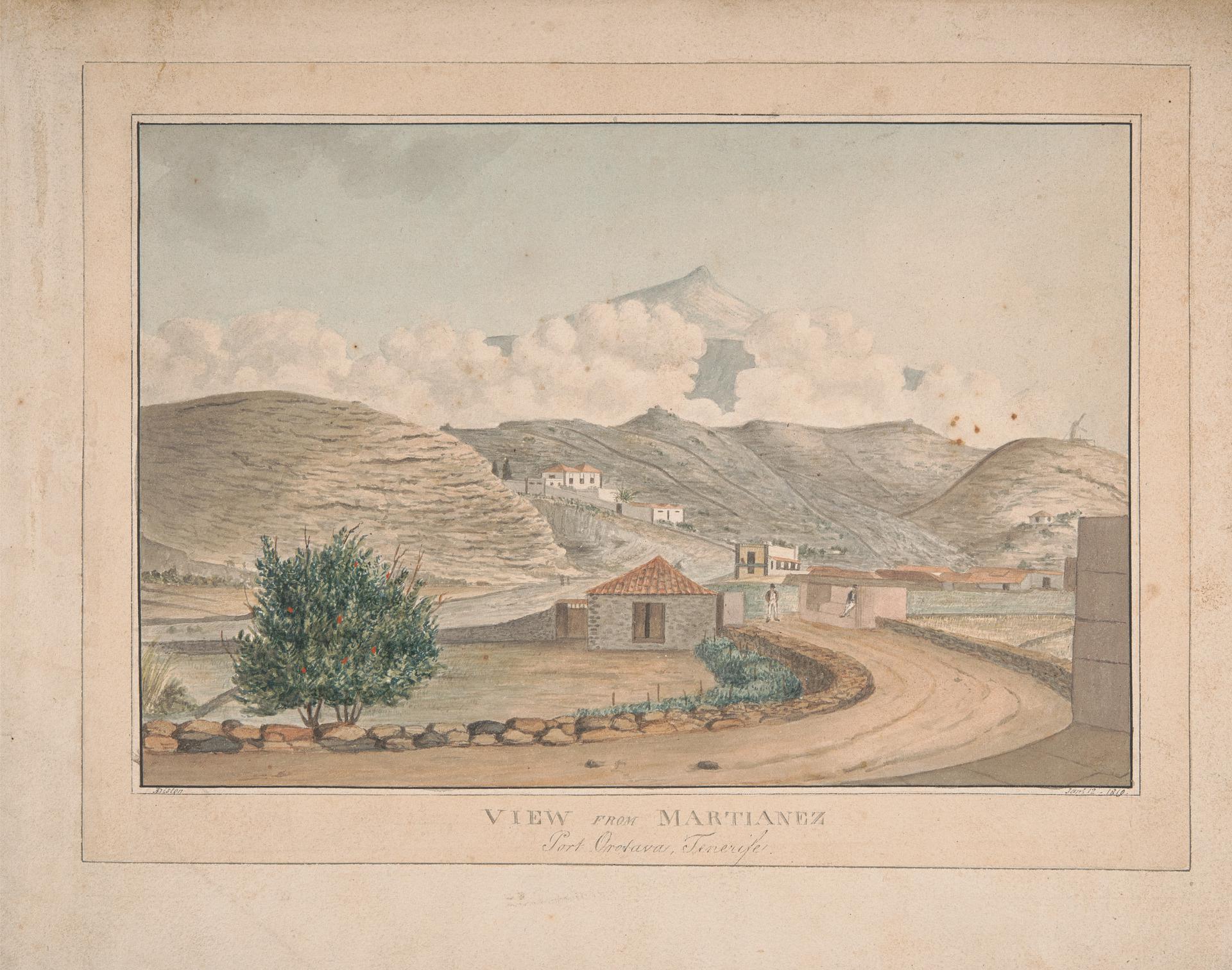
One of Diston's surviving works is an 1819 view from Martiánez, held by the Yale Center for British Art. It gives this story a place you can still recognise by name, even though the coastline and town around it have changed greatly. Look at the shape of the land and the relationship between settlement and sea, then compare it with the Puerto you know today.
A watercolour is not a photograph. Diston selected what to put on the page and how to arrange it. That choice is part of its value: we can see the town as an observant resident chose to show it, not merely as a set of dates in a history book. He also painted other views around Port Orotava and the Botanical Garden.
The pictures invite a slower look at familiar places. A present-day walk near Martiánez, the old town or the harbour becomes richer when you know that someone was studying and drawing the same landscape more than two centuries ago.
The people in his drawings
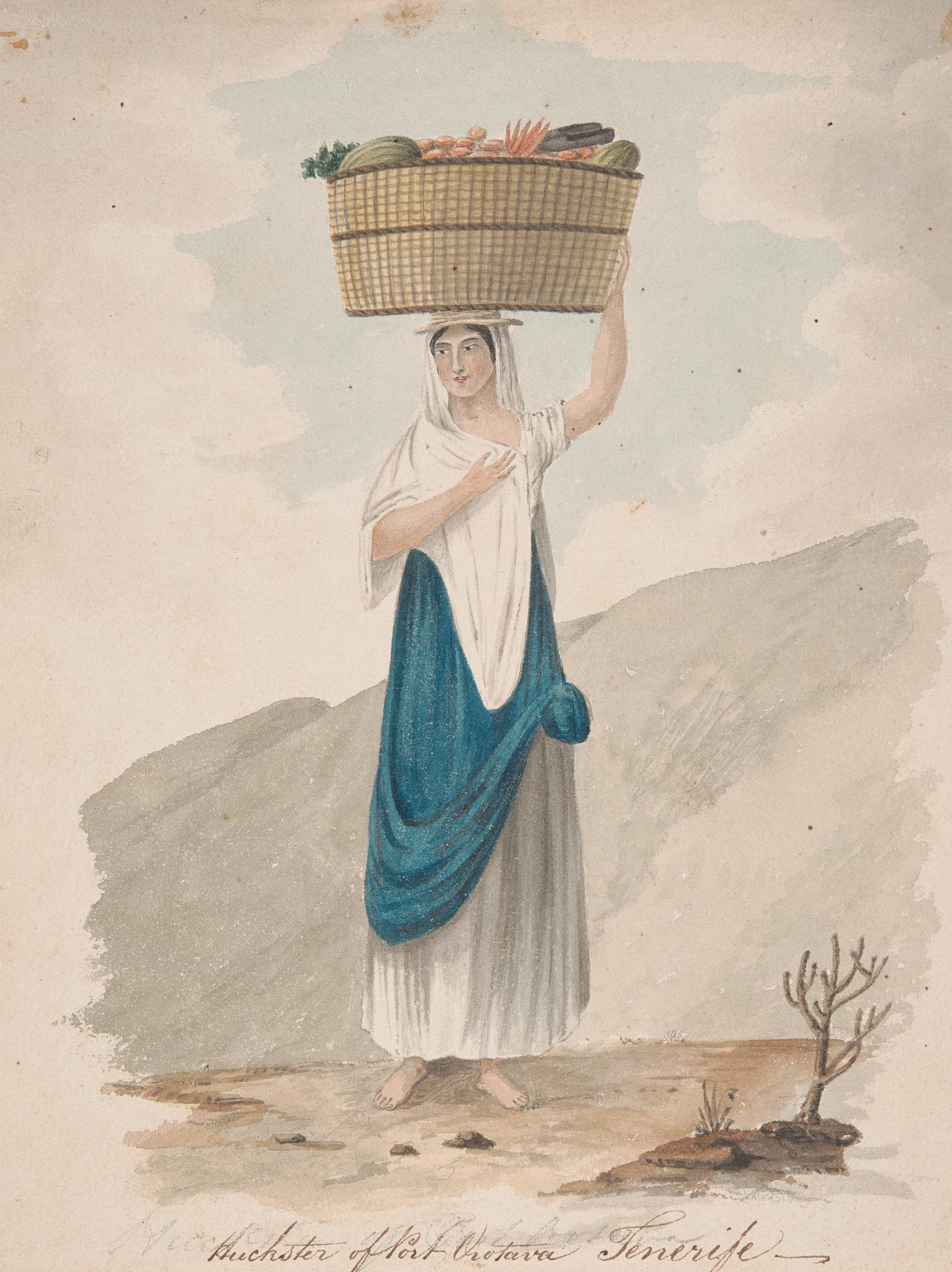
Diston is especially remembered for recording Canarian clothing. His drawings show people from different islands and districts, at work and in everyday dress as well as more formal clothes. A woman selling goods in Port Orotava, for example, appears in an 1828 watercolour now in the Yale collection. Rather than a single costume standing for all of Tenerife, his work shows variety from one place and occupation to another.
The Tenerife museum describes his illustrated albums as important evidence for the study of historical dress. Part of his Costumes of the Canary Islands project appeared in London in 1829; other drawings and manuscripts survived separately. Reproductions of his illustrations are displayed in the museum's Casa de Carta collection.
Look beyond the fabric in these pictures. Baskets, tools, posture and background details tell us something about the lives he saw. His images are a nineteenth-century artist's record, with all the selection that implies, but they preserve people and occupations often missing from grand stories about visiting travellers.
A notebook for more than pictures
Drawing was only one part of Diston's curiosity. The Museo de Historia y Antropología describes diaries containing weather reports, accounts of festivities, scientific observations and small incidents of island life. A catalogue of his work also records journeys to other Canary Islands and sketches of flowers, rocks, landscapes and people.
That range matters. He could pay attention to a plant in a garden, then to the dress of a person in the street, and then to the conditions of the day. These are different kinds of evidence, brought together by someone who lived here for years. They give later generations a fuller picture of the Canary Islands in the early nineteenth century.
Diston was a British merchant looking at Canarian society, so his drawings are one viewpoint among many. Read them alongside the island's own histories and the places that have survived, and they become a vivid way into the period.
Diston, the Little family and Sitio Litre
The Little in Pasley, Little & Co. also belongs to the history of Sitio Litre. The name of the estate grew from Little's place, and Diston's work with the family helps explain his connection to its house and garden. The official Canary Islands heritage description lists him among the notable people associated with Sitio Litre.
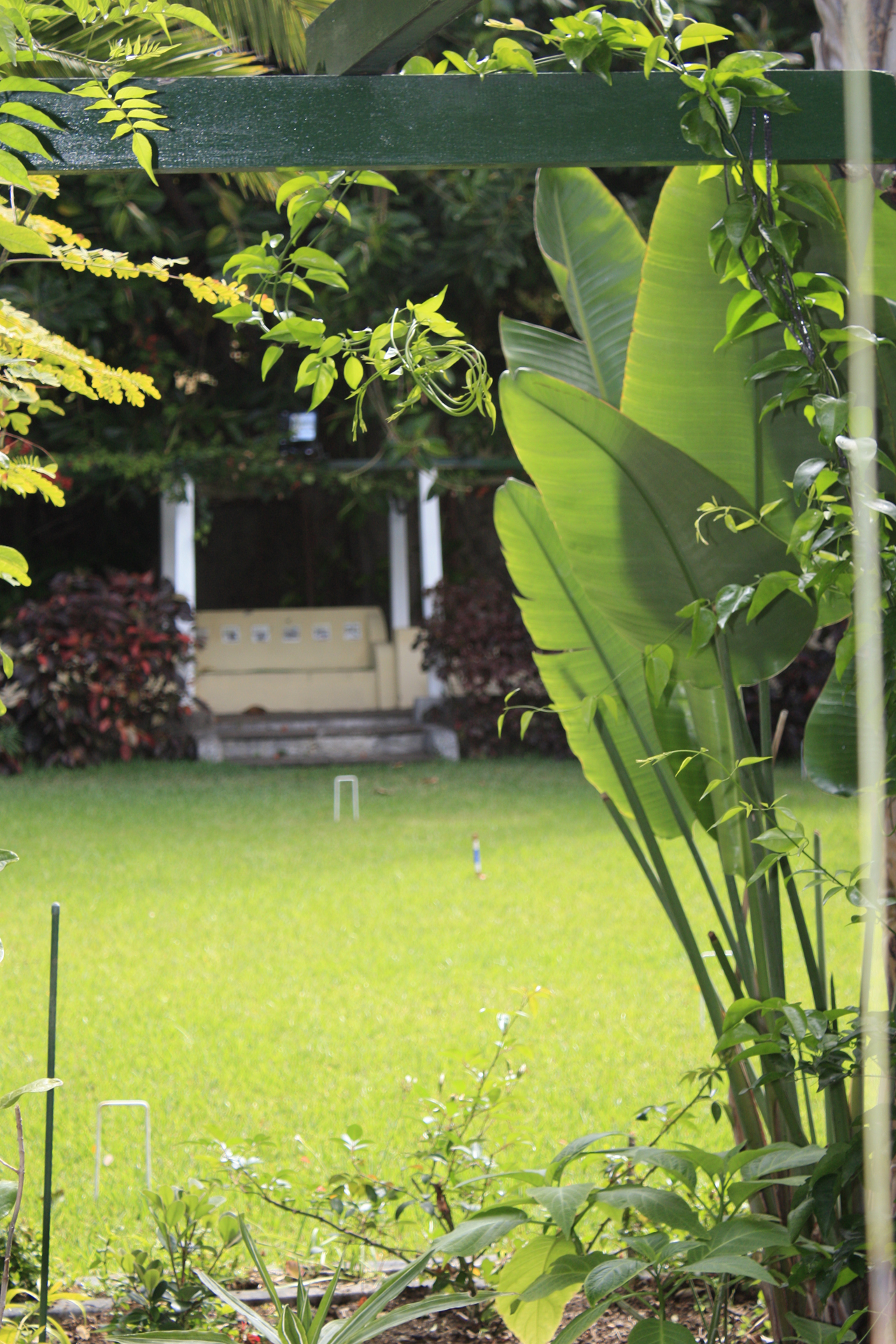
The garden's owners tell a more detailed story of Diston's involvement there and his interest in plants. Their account links the estate with early cultivation of Cavendish bananas and with his work at the nearby Botanical Garden. You can visit Sitio Litre's garden today: follow the paths, look at the older house from outside and think of a place where trade, social visits and plant collecting crossed paths. The house itself is private.
Sitio Litre is only one part of Diston's life, but it provides a useful starting point. It puts the merchant firm and the garden into the same story as the artist who kept looking beyond both.
His work at the Botanical Garden
Diston's interest in plants had a practical side. The Museo de Historia y Antropología says the Real Sociedad Económica de Amigos del País entrusted him with direction and inspection of the Jardín de Aclimatación de La Orotava. This is the historic garden visitors now know as the Jardín Botánico in Puerto de la Cruz, despite the old La Orotava name.
His 1821 drawing of the Botanical Garden, held by Yale, is especially fitting here. It shows that he looked at the garden as an artist as well as taking part in its care. The museum credits him with introducing plants there, including a Cavendish banana variety. Sitio Litre's owners also connect the estate to early banana growing. The later banana industry spread well beyond either garden, but their accounts show why Diston's botanical work still enters the town's history.
If you walk the Botánico's paths today, you are visiting a place that had already been a centre of plant experimentation during Diston's lifetime. The trees and collections have changed, yet the idea of learning from plants brought from elsewhere remains part of its story.
Why his work still matters
Diston died in Puerto de la Cruz in 1861. The official heritage account names him among those buried in La Chercha, the Protestant cemetery on the western side of town. A local walk can therefore connect places from different parts of his life: the port where he worked, Sitio Litre and the Botanical Garden, then the cemetery where his story ends. Our English Cemetery video visit gives a closer look at that historic site.
His drawings travelled much farther. Works of Canarian people and landscapes are preserved in collections such as the Yale Center for British Art, while the Tenerife museum uses his illustrations to help explain the history of island dress. The pages he left behind show the everyday texture of a changing town: not just its prominent houses, but sellers, rural workers, gardens and coast.
Diston was neither only a visiting artist nor only a merchant. He stayed, worked, married, observed and recorded. That long relationship with Puerto de la Cruz is what makes his pictures especially interesting when we look at the town now.
Follow Diston's story around Puerto de la Cruz
Begin at Sitio Litre to understand the Little family connection and enjoy the garden. Continue to the Jardín Botánico, another place tied to his work with plants. Around Martiánez and the old town, his watercolours can change how you see the streets and coastline, even though the town itself has grown far beyond the one he knew.
For the last chapter, our film about the English Cemetery introduces La Chercha. The museum collections and the historical images identified for this article let you meet Diston through what he made, not just through a name on a list of visitors.
Follow PuertoDeLaCruz.info in Google
If our Puerto de la Cruz guides are useful to you, you can add PuertoDeLaCruz.info as one of your preferred sources in Google.