
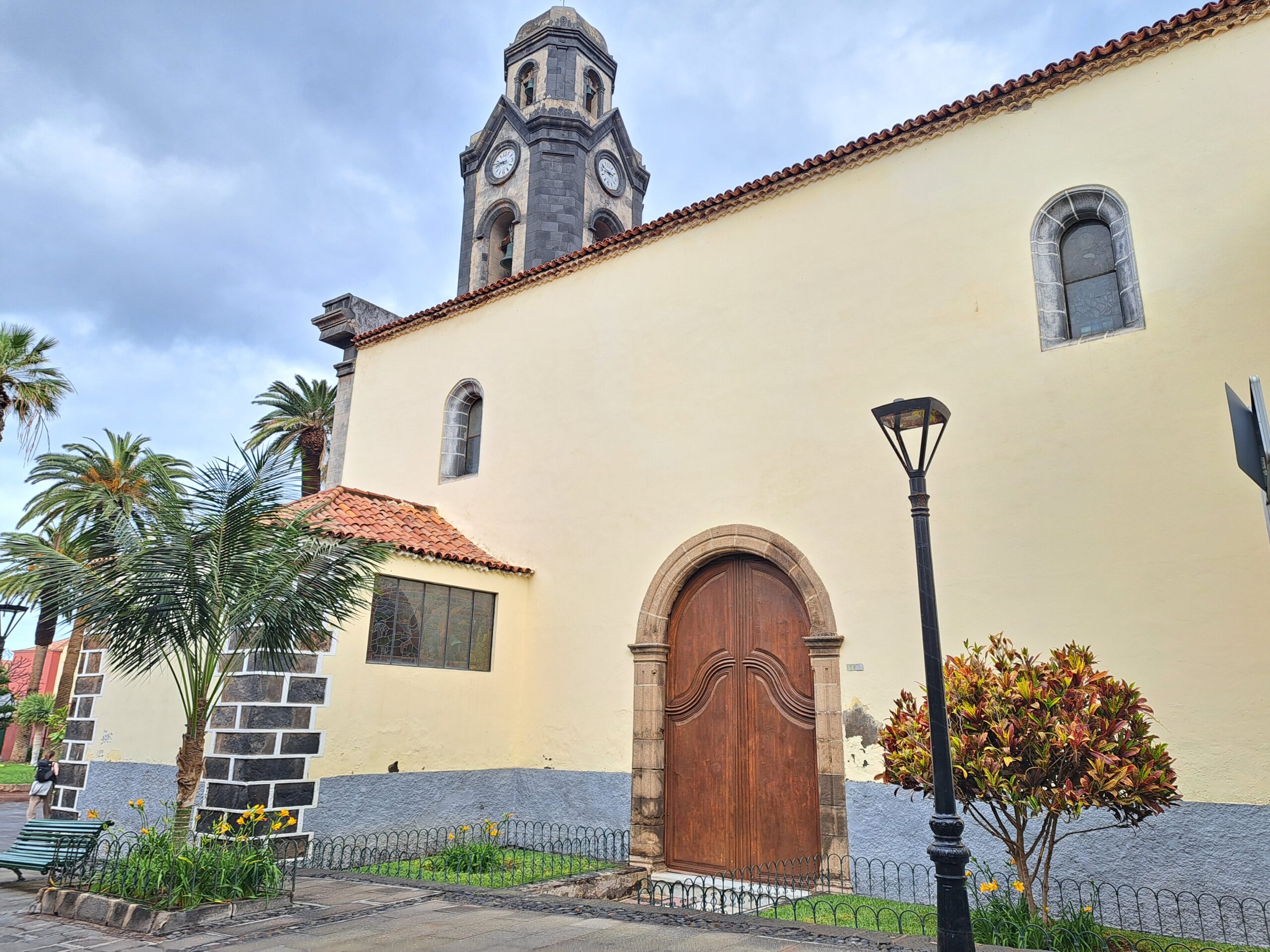
Step into Plaza de la Iglesia and the parish church gives the square its centre of gravity. Its tower rises above the trees and café tables, while inside a timber ceiling, painted altarpieces and silverwork tell a longer story of Puerto de la Cruz. Iglesia de Nuestra Señora de la Peña de Francia has served the town through centuries of growth, trade and celebration. It is still a place of worship, and one of the most rewarding historic interiors to see on a walk through the old town.
The church at a glance
Where: Plaza de la Iglesia, in the historic centre of Puerto de la Cruz, beside Calle Quintana. What to look for: the three naves and carved timber ceiling; the main altarpiece and image of Nuestra Señora de la Peña de Francia; the chapels, paintings and silver-clad cross. Allow: time to enjoy the square as well as a quiet look inside if the church is open. Visiting: this is an active parish church, so access can change around Mass, ceremonies and other parish activities. Check locally before making a special journey, and be considerate during worship.
Begin in Plaza de la Iglesia
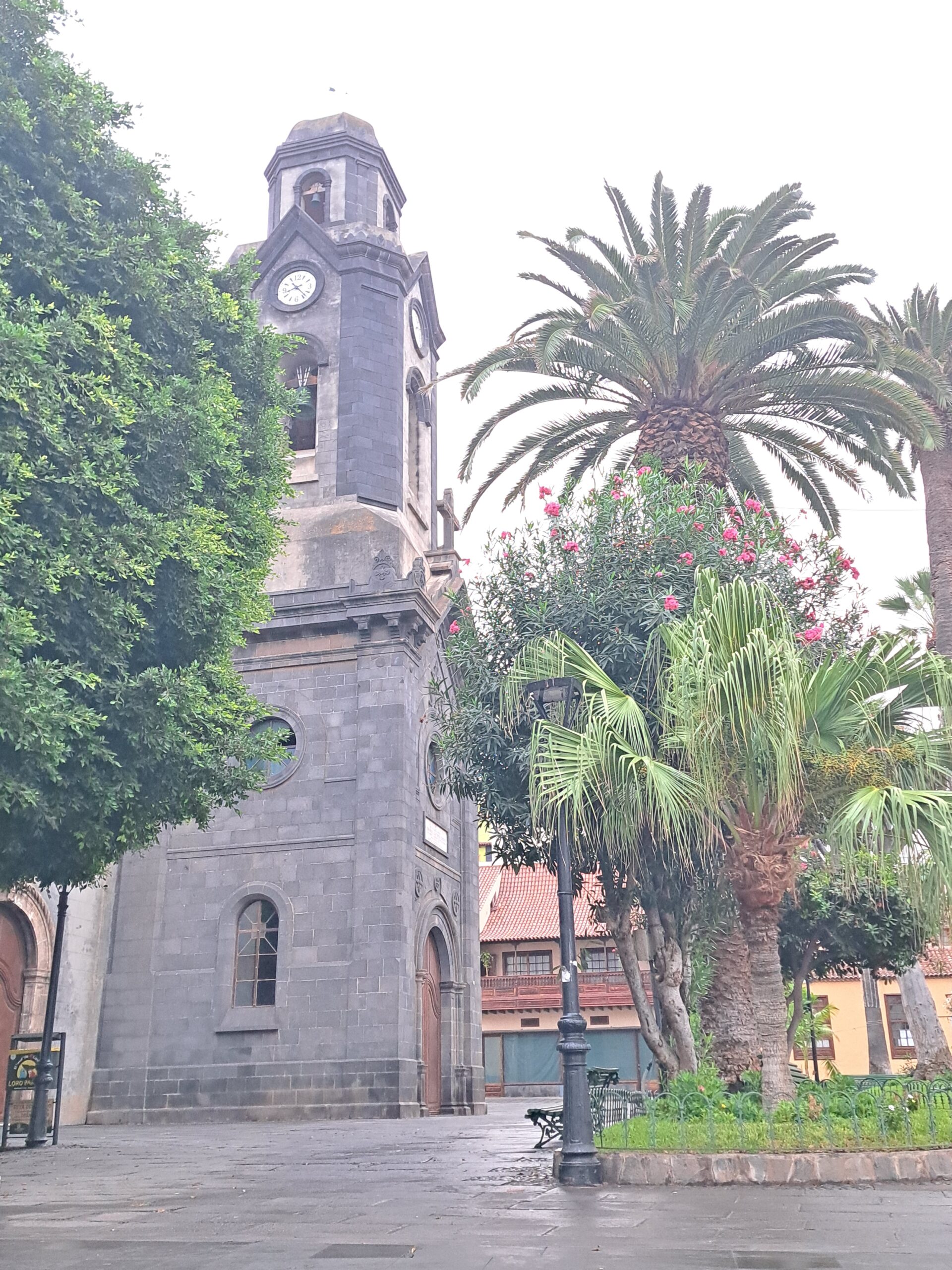
It is easy to arrive at the church almost by accident. Follow Calle Quintana inland from the sea, and the old streets open into a leafy square. People cross it on errands, stop to talk or sit for a while beneath the trees. The church belongs to that everyday scene as much as it belongs to the town's history. Before going inside, walk around the square and look back at the tower from a little distance.
Puerto de la Cruz grew around more than one public centre. The church square became a place for worship and gathering, while Plaza del Charco and the nearby harbour were closely tied to the commercial life of the port. Walking between them helps you see how short the distance was between parish, homes, businesses and the Atlantic. Our Calle Quintana video walk follows this approach, and the Plaza del Charco Post continues the story toward the harbour.
From a small chapel to the parish church
The present building stands on the site of an earlier chapel. As Puerto's population and trade expanded in the seventeenth century, the little place of worship could no longer serve a growing community. Local donations helped pay for a larger parish church, with the town's trading families taking a prominent part. The Centro de Iniciativas y Turismo gives 1697 as the completion of those works.
The history was not a single building campaign. Chapels were added and the interior gained altarpieces, images, paintings and gifts across later generations. That layering makes the church feel lived in: a place shaped by the people who worshipped here, not a building frozen at one date. Some of the works recall links far beyond Tenerife, including a silver-gilt monstrance made in Cuba and later gifts associated with visitors to the island.
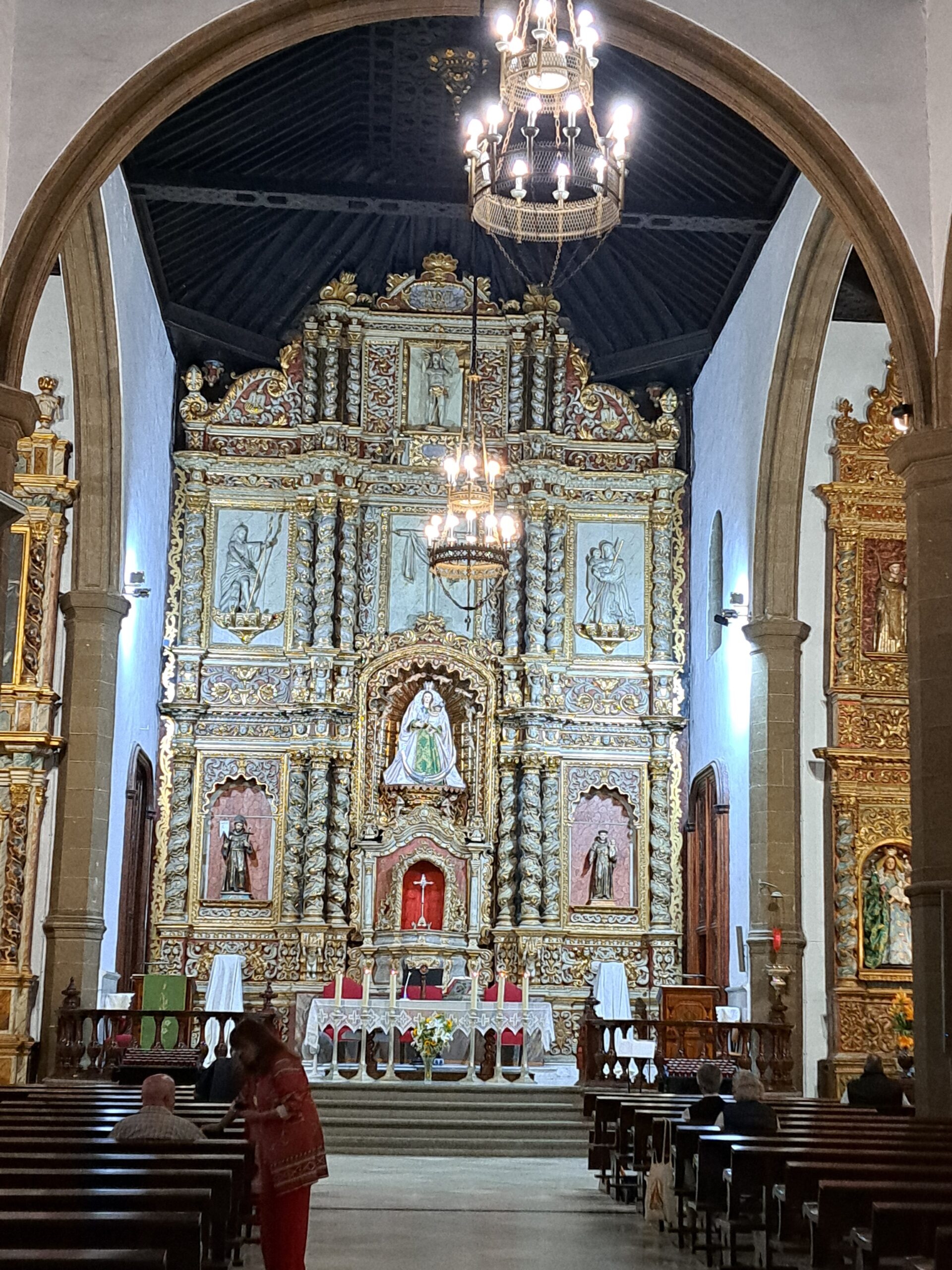
The Virgin whose name the church bears has a particularly long connection with it. The main altarpiece dates from 1710, with later alterations, and frames a seventeenth-century image of Nuestra Señora de la Peña de Francia. From the square you might expect the nineteenth-century tower to set the date for everything inside. Once you enter, the older heart of the building becomes clear.
Why the tower looks different from the older church
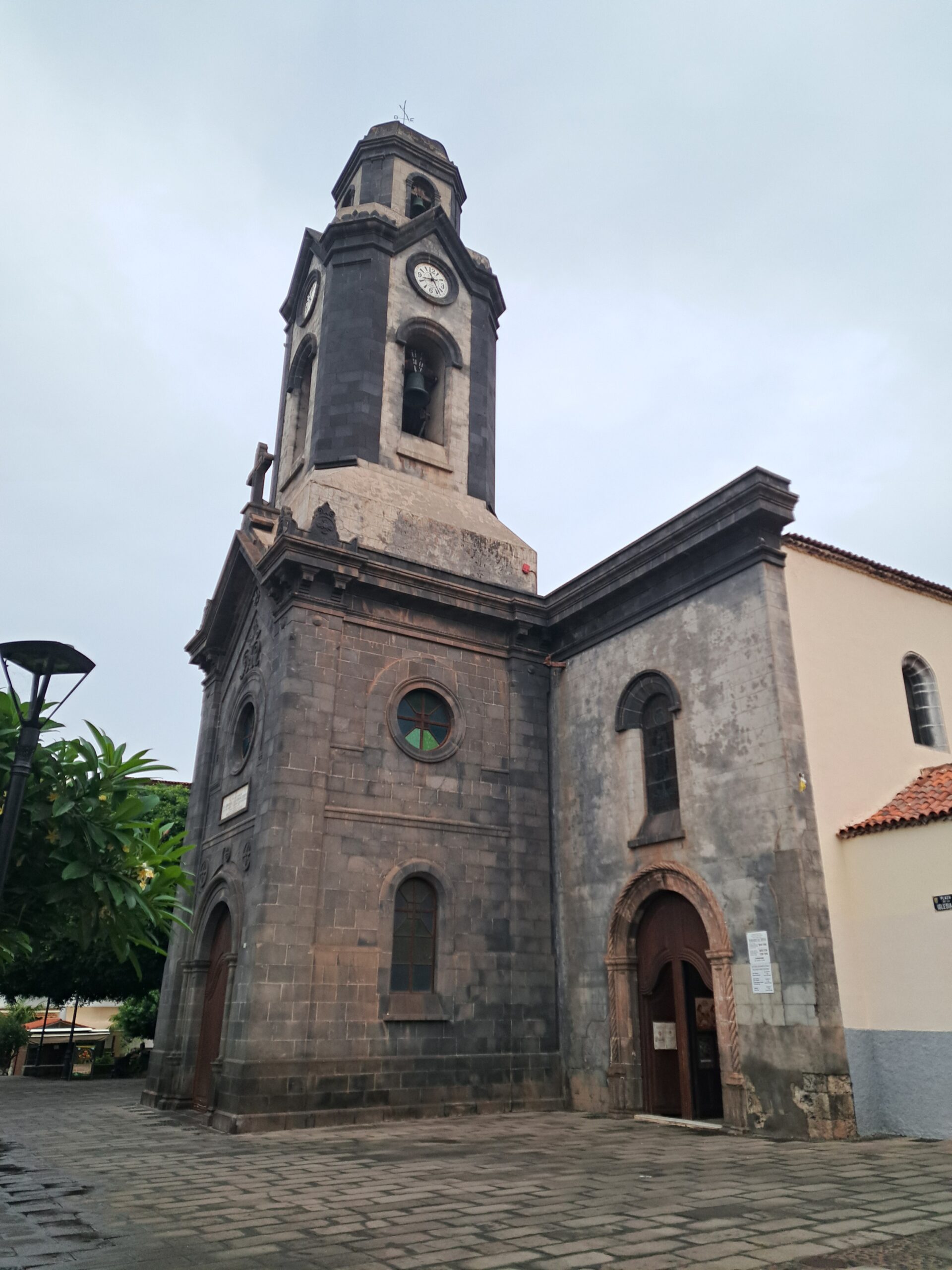
The front of the church changed substantially at the end of the nineteenth century. Architect Manuel de Cámara redesigned the façade, removing the small Canarian timber balconies and earlier bell features. The present tower was built in 1898, according to the local tourist information centre. Its strong vertical shape is now the church's most familiar street view, even though the building behind it reaches back much further.
If you enjoy noticing how towns change, imagine the earlier front with its balconies facing the square. The church's current appearance brings several periods together: an old parish plan, chapels developed over time and a tower from Puerto's later nineteenth-century transformation. That is why it is worth taking in both the exterior and the interior, if an interior visit is possible.
Look up: the timber ceiling and three naves
Inside, slow down and look up before heading for the altars. Three naves are divided by rounded arches resting on Tuscan-style columns. Above them is an intricately worked timber ceiling in the Mudéjar tradition, a feature found in many historic Canarian churches. The wood gives the interior a warmth that the stone and plaster alone could never create.
Notice also that the small side chapels do not form a perfectly matched pair. They were added to the original structure at different times. A walk from one side to the other reveals how the church grew with its congregation, while the central view holds the different spaces together. The exterior roof is tiled; inside, it is the ceiling's craft and pattern that draw the eye.
The Virgin and the main altarpiece
At the far end of the nave, the baroque main altarpiece gives the church its focus. It was completed in 1710 and subsequently reworked. In its central niche is the image of Nuestra Señora de la Peña de Francia, described in the official heritage listing as a seventeenth-century work of the Genoese school. The image gives the parish its name, but the church also holds other figures with their own place in local devotion.
Give yourself a moment to take in the whole composition before looking for individual details. The arrangement of figures, carved framework and changing light is easier to appreciate at a gentle pace. Religious images are not always accessible at close quarters, and their position may change for worship or conservation; enjoy what can be seen without crossing barriers.
Art, silver and the town's wider connections
Several of the church's treasures reward a closer look. Four paintings by Luis de la Cruz y Ríos, an artist from Puerto de la Cruz, belong to the Gran Poder de Dios altarpiece. The official heritage inventory also records a Virgen de los Dolores by José Luján Pérez, a nineteenth-century organ, a baptismal font of Italian origin and worked silver carried or displayed in church celebrations. These objects are part of the church's history even when a particular piece is kept in a sacristy or another space outside normal visitor access.
One especially meaningful object is the large wooden cross clad in worked silver, a symbol closely associated with the city. The silverwork and the vessels used for Corpus celebrations hint at the wealth, craft and far-reaching connections of a busy Atlantic port. The inventory includes a silver-gilt monstrance made in Cuba in the eighteenth century. Rather than trying to see every listed object in one visit, choose a few visible details and think about the journeys of people and materials behind them.
The Virgen del Carmen and Gran Poder de Dios also have a strong place in Puerto's devotional life. Their July celebrations bring the story out from the church into the town. A quiet weekday visit and a fiesta day reveal very different sides of the same place.
A living parish, not only a historic monument
The Canary Islands government declared the church and its associated movable heritage a Bien de Interés Cultural, with the status of Monument, in 2003. That protection recognises the importance of the building and the art it holds. Yet the church's value is also visible in ordinary parish life: people come here to pray, attend Mass, mark family occasions and gather for processions.
During Holy Week, routes through the old town connect the church with streets and other chapels. In July, festivities honour the Gran Poder de Dios and the Virgen del Carmen. The precise programme changes from year to year, so look for the current parish or town announcement if you want to attend. Even outside those occasions, the church and square remain closely connected to how Puerto de la Cruz sees itself.
How to enjoy a visit
Plaza de la Iglesia is a natural stop on a walk through central Puerto de la Cruz. Come along Calle Quintana, pause in the square and look at the tower before entering. If the doors are open and there is no service in progress, take a quiet circuit: the arches and timber roof first, then the main altarpiece and any accessible side chapels. Keep photography discreet and follow any signs or requests from parish staff.
Opening times can vary with services, ceremonies and conservation work. If the church is closed, the exterior and the square are still worth your time; return on another day if the interior matters to your visit. Our historic gardens and plazas video, Part 2 includes the church square on a wider route through town. From here you can carry on down to the Plaza del Charco, the old port and the seafront.
Follow PuertoDeLaCruz.info in Google
If our Puerto de la Cruz guides are useful to you, you can add PuertoDeLaCruz.info as one of your preferred sources in Google.