
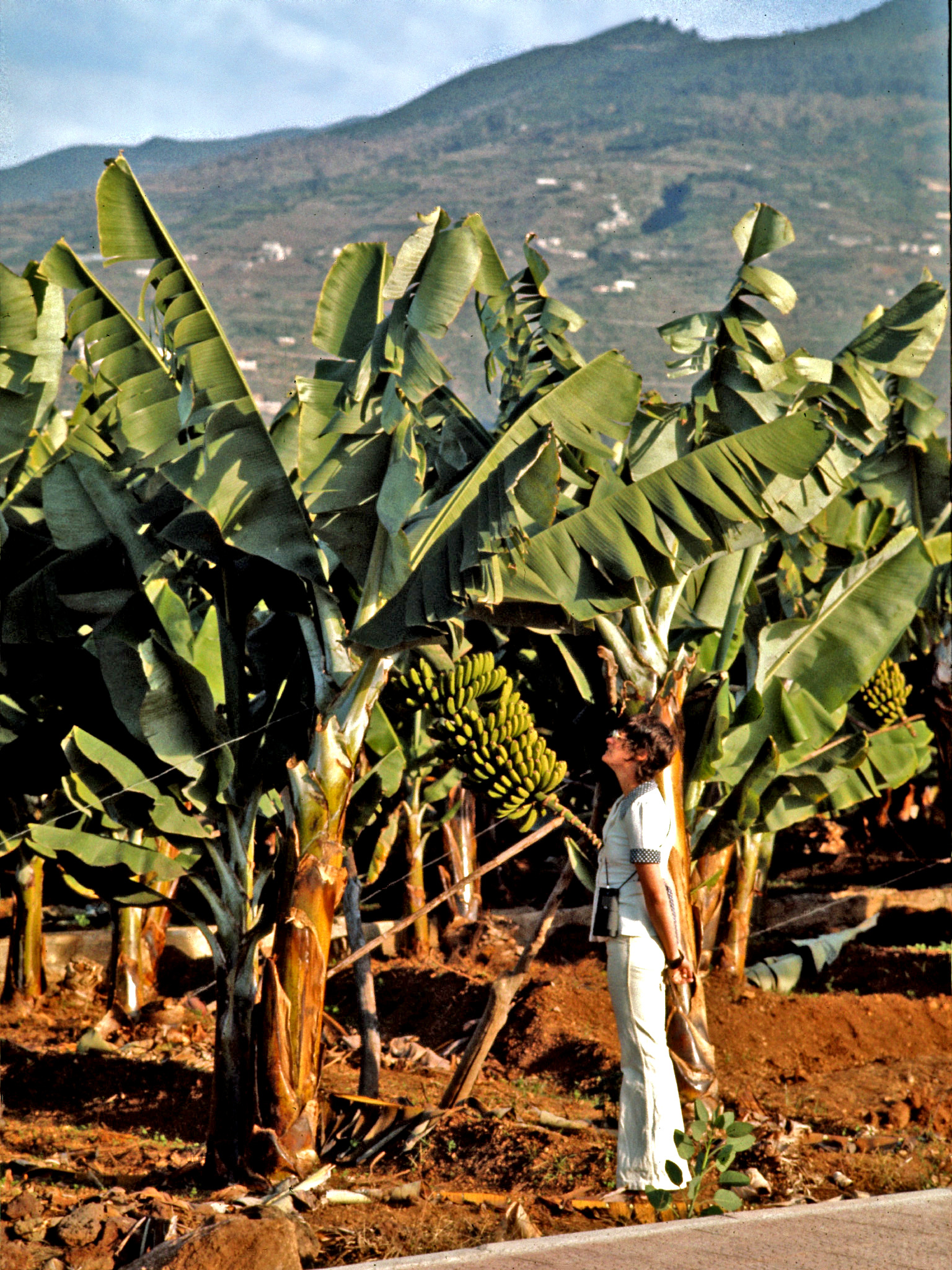
Before a banana from the Orotava Valley could leave Tenerife, it had to travel from the grove to a packing store, then through the streets of Puerto de la Cruz to the harbour. Growers, packers, drivers and boat crews all played a part. The old empaquetados may have disappeared from many familiar corners of town, but their story still connects its neighbourhoods to the sea.
The journey at a glance
Fruit came from groves in and around the Orotava Valley to packing stores across Puerto de la Cruz. There it was cleaned, separated, sorted and boxed. Trucks then took the boxes towards the harbour, where small boats could carry them out to fruit ships offshore.
From the groves to town
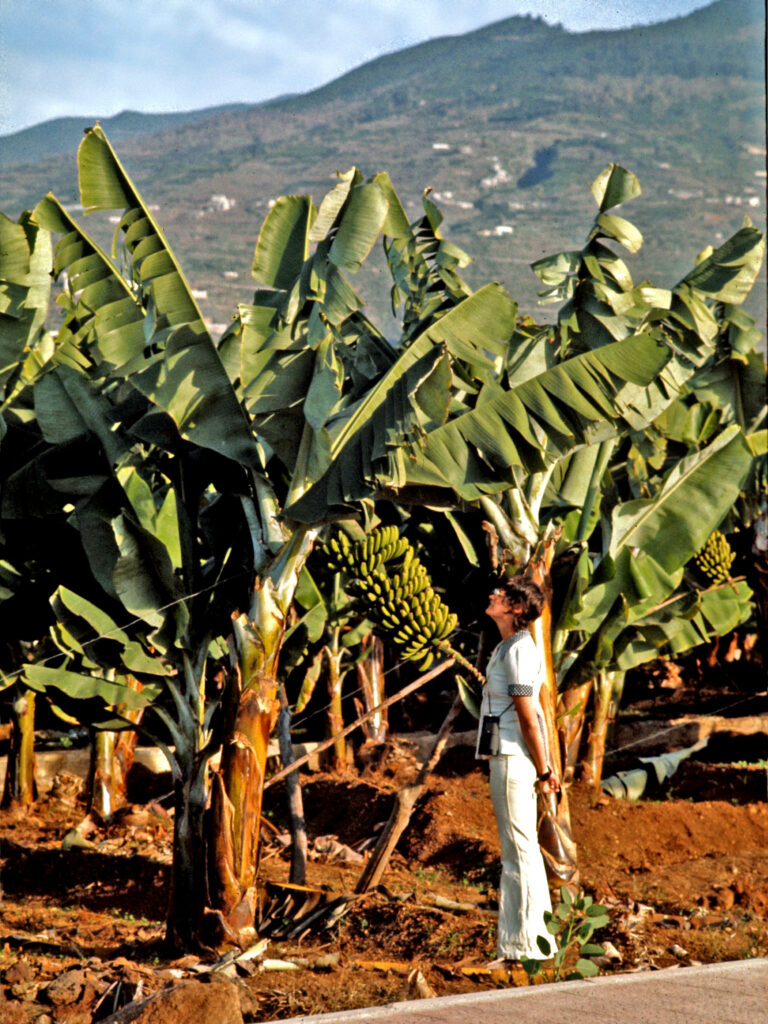
Banana plants need land and water, and a cut bunch is heavy and easily bruised. Around Puerto de la Cruz, farm workers tended the groves and moved the harvest to packing stores where it could be prepared for the journey ahead. The Gordejuela water elevator in nearby Los Realejos is a striking reminder of the investment in water that helped sustain banana cultivation in the Orotava Valley.
Some growers and exporters controlled several stages of the route. By 1937, Yeoward had eleven banana estates across the valley, along with water supplies, packing stores and trucks. Its operation was one part of a much wider local trade, with other growers, cooperatives and firms moving fruit through Puerto de la Cruz. For the broader story of the crop, see our history of bananas in Tenerife and Puerto de la Cruz.
Inside an empaquetado
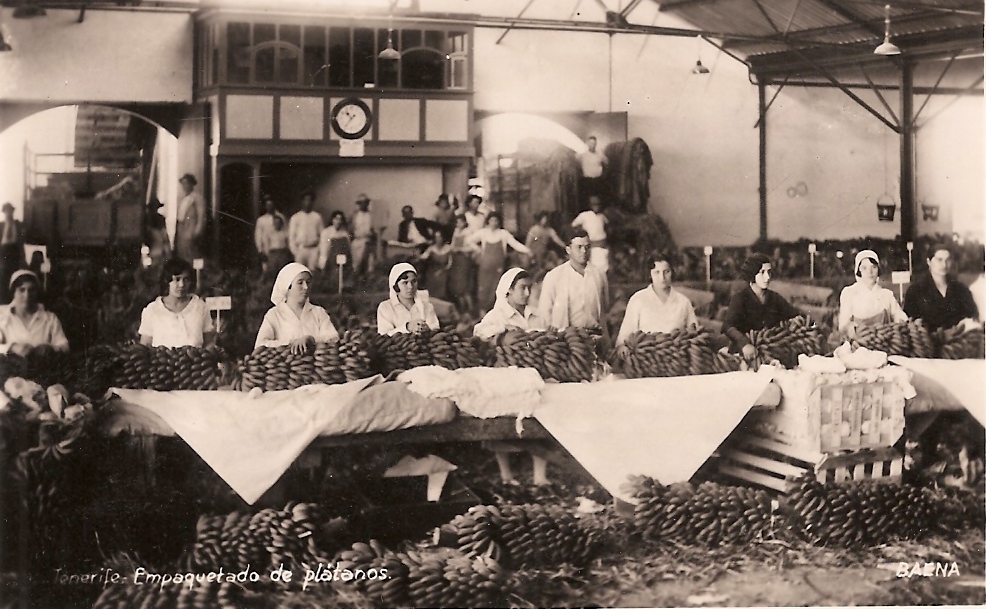
The empaquetado was a busy workplace. Bunches were cleaned and divided into smaller hands of bananas. The fruit was washed, graded and sorted before being packed into boxes for transport. Care at each stage helped protect it from damage on the way to market.
These stores brought women and men together at work and gave some young people their first job. They were part of daily neighbourhood life too. People passing the doorway would greet workers they knew; trucks arrived to load fruit, sometimes squeezing into narrow streets. One local memory recalls children asking for spare coloured packing paper to cover their schoolbooks. The trade reached well beyond the boxes leaving the building.
Packing stores across Puerto de la Cruz
There was no single banana warehouse for the town. A local recollection compiled with Tomás Perera Hernández names almost twenty former packing-store locations across the municipality. T. M. Reid was remembered at the corner of Calle San Felipe and Calle Perdomo, Julio Cruz González in El Tejar on the site of today's Municipal Market, the Cooperativa Agrícola Bananera beside the Botánico road, and Yeoward Brothers at El Penitente. Other stores were recalled in Las Cabezas, La Vera, El Durazno and the town centre.
Many of these buildings have gone or found new uses. Their former locations show how closely banana packing was woven into the streets people still walk. Yeoward Brothers at El Penitente has its own story, but it was one workplace among many.
From boxes to the fruit ship
Once packed, the bananas travelled towards the waterfront. At Puerto de la Cruz, small boats carried cargo from the harbour to larger fruit ships anchored offshore. A historic photograph of a boat laden with banana crates on its way to Yeoward's Alondra captures the final local stretch of that journey: boxes, boatmen and a ship waiting beyond the quay.
The loading arrangements changed over time. In 1922, Yeoward asked permission for a crane at El Penitente to speed the handling of fruit, and work to improve the landing place followed later in the decade. Our El Penitente history tells more of that waterfront site. To picture the short passage from town streets to sea, follow the walk from San Telmo to El Muelle.
The people behind the trade
Company names survived on shipping records and fruit labels. The daily work also depended on Canarian growers, farm labourers, packers, drivers and boat crews. Each box represented hours of handling before it ever reached a ship. For many families, the packing store was a source of wages and a familiar part of the neighbourhood's working day.
A changing town
Tourism expanded rapidly in Puerto de la Cruz from the 1960s, and many former packing workers moved into hospitality and other work as old stores closed. Banana production did not simply end when hotels grew. A government order in 1971 recorded plans for a cooperative banana separation and packing facility in Puerto de la Cruz; another in 1978 approved improvements to a cooperative centre. Bananas and tourism belonged to the town's story at the same time.
Follow the route through Puerto
You can still connect the places on a walk. Start by the Municipal Market in El Tejar, then head towards the Ayuntamiento and Plaza de Europa, close to the former Yeoward premises at El Penitente. Continue to the old harbour and look out to where fruit boats met the ships. For a glimpse of banana-growing country beyond the centre, take the walk towards El Bollullo.
Follow PuertoDeLaCruz.info in Google
If our Puerto de la Cruz guides are useful to you, you can add PuertoDeLaCruz.info as one of your preferred sources in Google.