
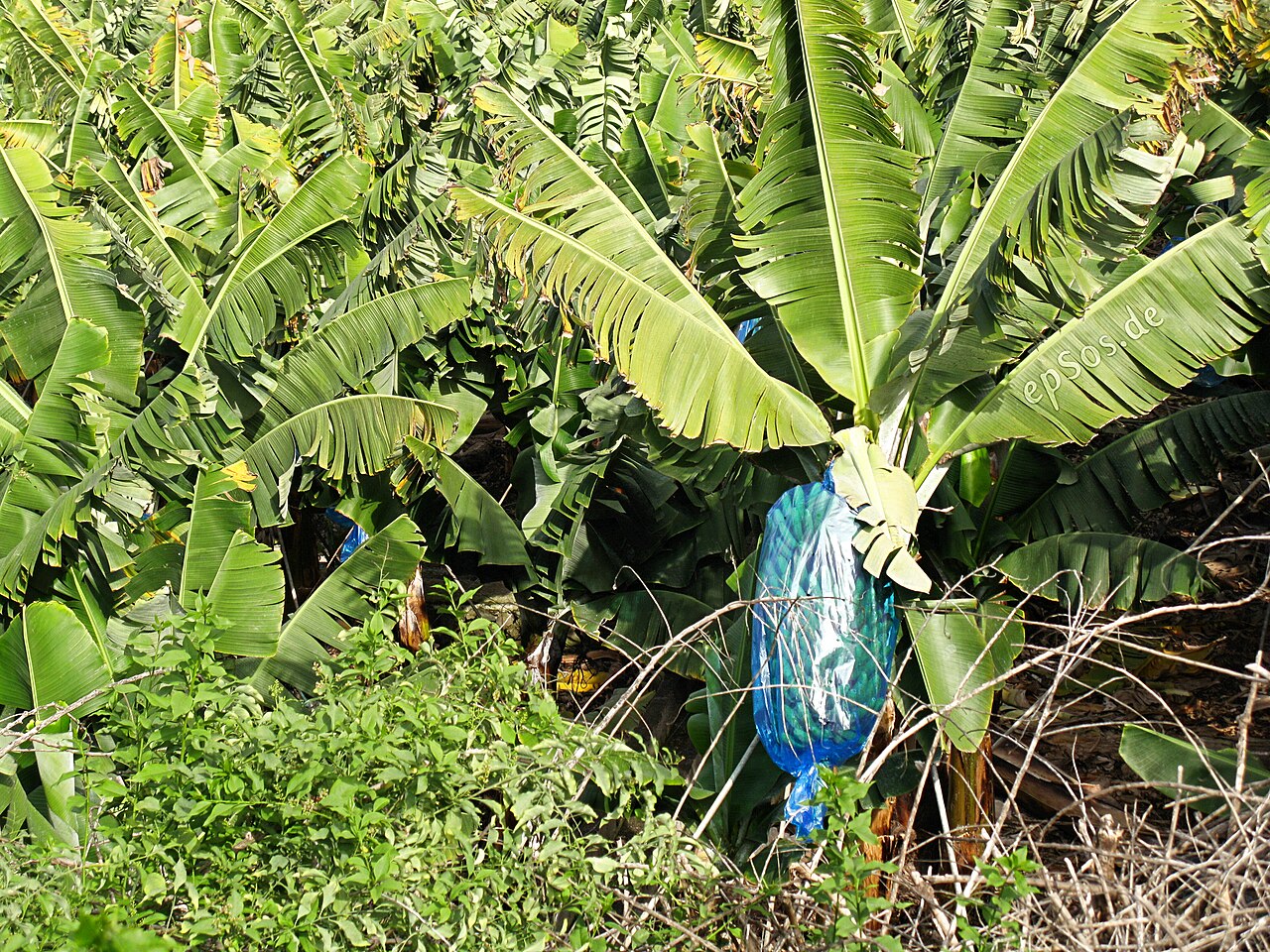
Look beyond the seafront of Puerto de la Cruz and you can still find broad banana leaves along the paths towards El Bollullo. They are a reminder of an industry that reshaped the Orotava Valley and the town below it. A garden experiment, water lifted from a cliff, busy packing houses and fruit boats waiting offshore all belong to this story. Here is how the plátano became part of Tenerife’s landscape, and where you can still see its history around Puerto today.
Banana history at a glance
Long roots: banana plants reached the Canary Islands around 1500. Puerto’s turning point: bananas became a notable commercial crop from about 1880 and dominated local planting in the early twentieth century. The local route: Sitio Litre, the old harbour and former Yeoward site by the Ayuntamiento, the Gordejuela water elevator in neighbouring Los Realejos, and the plantation-lined walk towards El Bollullo.
Bananas were here before the export boom
The banana was part of island life long before the familiar export plantations appeared. A Canary Islands geographical-indication record places its arrival around 1500. For centuries it was grown on a smaller scale and eaten locally; a few bunches could leave with passing ships, but fruit did not travel easily on a long sea voyage.
In nineteenth-century Puerto de la Cruz, wine and then cochineal had their own chapters in the trading economy. The town’s municipal history describes its gradual shift from a port-led economy towards agriculture, followed by new crops, including bananas. It dates the banana’s rise as a significant commercial crop to around 1880. That distinction matters: the first banana plants and the later plantation and export business were separated by generations.
Alfred Diston and the dwarf banana at Sitio Litre
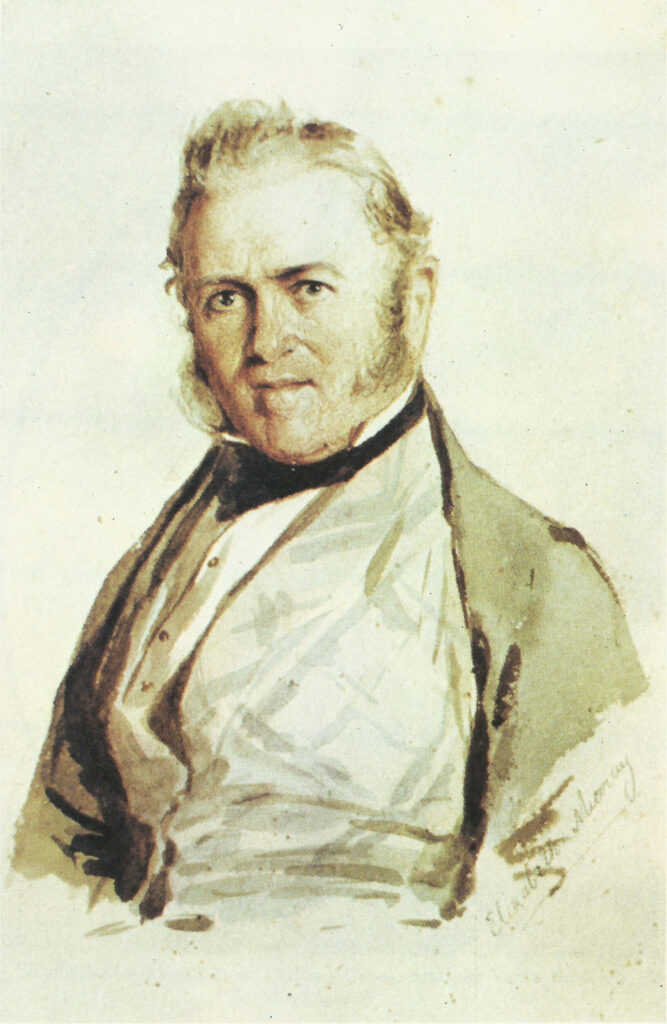
In the middle of that longer story stands Alfred Diston, a British merchant and keen observer who made Puerto de la Cruz his home. He was associated with the historic estate of Sitio Litre. Nineteenth-century local accounts credit him with bringing a dwarf Cavendish banana from a Scottish garden to Tenerife in the 1840s. Its shorter, sturdier form was considered better able to cope with wind than the taller bananas already known on the island. The new plants multiplied in local gardens before export growing took off.
This is why Sitio Litre belongs on a banana-history walk, even though visitors come today for its old dragon tree, orchids and peaceful paths. The connection is to the spread of a particular banana type, not the arrival of the first banana in the Canaries. The garden’s account also celebrates Diston’s role; the later export companies were part of a different, subsequent stage. Step into the garden and it is easier to picture a period when a plant shared among gardeners could change the view across the valley.
When ships could carry the fruit
Bananas bruise and ripen. A dependable trade needed growers, packing, shipping and buyers working to the same timetable. As steamships shortened Atlantic journeys, the Canary Islands could send increasing quantities to Britain. An official Canary Islands record estimates about 10,000 bunches exported to the United Kingdom in 1884 and 1.5 million in 1901. Those are figures for the Canary Islands as a whole, not for Puerto de la Cruz.
British firms including Yeoward and Fyffes helped organise the trade, while Canarian farmers and packing workers grew, harvested and prepared the fruit. An academic study of British business interests records Yeoward’s banana estates in the Orotava Valley and Fyffes’ network of packing stores, including one in Puerto de la Cruz. The familiar green landscape depended on a web of work: tending the plants, cutting bunches, carrying them, packing them and getting them onto the ships.
The valley needed water as well as warmth
From a viewpoint above Puerto, the Orotava Valley looks naturally green. Commercial banana growing, however, required a reliable supply of water. Growers invested in galleries, tanks and channels, as well as land and packing sheds. In Los Realejos, just west of Puerto, the Hamilton family built the Gordejuela water elevator in 1903 to lift spring water towards banana land higher in the valley. Its dramatic shell survives on the cliffs.
It is one of the clearest physical reminders that a banana plantation was an engineered landscape. Our Gordejuela guide takes a closer look at the ruin and its water story. Gordejuela is in Los Realejos, but the project served the wider Orotava Valley economy in which Puerto de la Cruz played a central trading role.

Packing bananas beside today’s Town Hall
The trade also left a mark in the centre of Puerto. Historical research on Yeoward Brothers places its packing building and landing place at El Penitente, near the old harbour. Fruit could be taken out in small craft to ships lying offshore. A surviving historical photograph of a boat laden with banana crates heading from Puerto to a Yeoward fruit ship makes that work vivid: the harbour was a working link in a chain stretching from the finca to the British market.
The former Yeoward site is now occupied by the Ayuntamiento. When you visit the Town Hall and Plaza de Europa, you are looking at a place with a convent history, a banana-export chapter and a modern civic life. The buildings and waterfront have changed, so do not expect to find the old packing house standing. The location gives an everyday landmark a less obvious story.
Growth, disruption and new markets
The municipality says banana plants became the preferred local crop during the first three decades of the twentieth century. Yet an export crop was vulnerable to events far beyond Tenerife. The First World War disrupted the British market; later the worldwide depression restricted exports in the 1930s. The Second World War again closed foreign routes, and mainland Spain became the principal destination for Canary bananas.
The work did not disappear when one market faltered. Fruit still had to be grown and packed, and local organisations had a larger role. A 1978 Spanish government notice names a banana hand-separation and packing centre run by the Cooperativa Agrícola Bananera de Tenerife in Puerto de la Cruz. It is a useful reminder that the story goes beyond the age of British fruit ships: banana work and packing remained part of the town well into the later twentieth century.
From banana fields to a tourist town
Bananas and visitors shaped Puerto de la Cruz at the same time. Tourism had begun to grow in the late nineteenth century, alongside the export crop; Gran Hotel Taoro belongs to that early visitor story. The municipality describes a far sharper change in the 1960s, when hotels and other development took land and economic importance away from banana growing.
That change did not erase every trace of the old landscape. Around the edges of town, the tall leaves and dark stone boundaries still give a sense of the agricultural valley that once reached much closer to the resort. The next time you see a banana plant behind a wall, picture the work that surrounded it: irrigation, harvest, crates, lorries, packing sheds and ships.
Where to follow the banana story today
Start at Sitio Litre for the Diston connection and enjoy the garden in its own right. Then walk down towards the Ayuntamiento and Plaza de Europa and the old harbour, where Yeoward’s Penitente packing and landing site once stood. The historic gardens tour with Ramón Michán begins at Sitio Litre and continues to the waterfront, though it is a wider garden walk rather than a dedicated banana tour.
For living banana plants, follow our filmed La Paz to El Bollullo walk. The path leads from Puerto towards plantations and the coast in neighbouring La Orotava. Respect the working fincas and stay on the public path. If you want to explore the water story separately, read the Gordejuela guide before visiting the clifftop area in Los Realejos.
Follow PuertoDeLaCruz.info in Google
If our Puerto de la Cruz guides are useful to you, you can add PuertoDeLaCruz.info as one of your preferred sources in Google.