
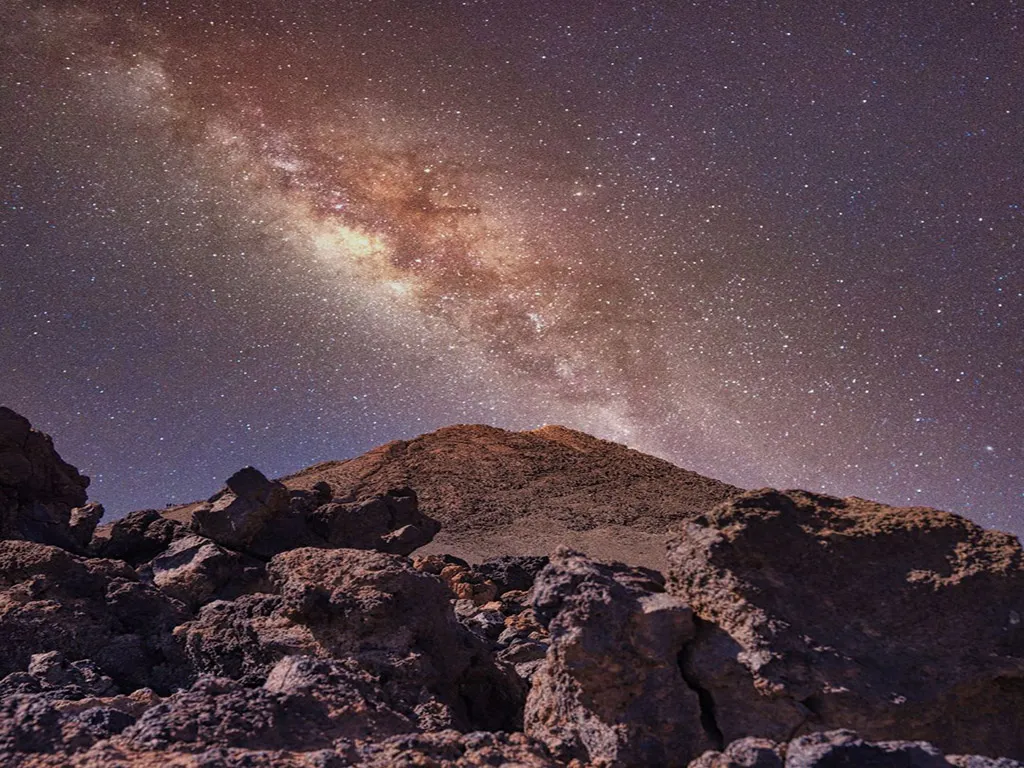
In 1856, Charles Piazzi Smyth came to Tenerife with a question: would a telescope see more clearly above the clouds? His journey connected the gardens of Sitio Litre in Puerto de la Cruz with temporary observing stations high on Guajara and the slopes of Teide. He and his wife, Jessie Duncan, brought back observations, drawings and remarkable early photographs. The mountains were the setting for the experiment, but Puerto de la Cruz was part of its story.
The story at a glance
Who: Charles Piazzi Smyth, Astronomer Royal for Scotland, and his wife Jessie Duncan Piazzi Smyth. When: summer 1856. The question: could observations made high above Tenerife's clouds reveal finer detail than observations from lower ground? Where: a journey through Tenerife, including Puerto de la Cruz, Mount Guajara and Altavista on Teide. The Puerto connection: the Canary Islands' official heritage record names Piazzi Smyth among the notable visitors associated with Sitio Litre. The garden is open to visitors today; the house is private.
Why did an astronomer come to Tenerife?
Imagine looking towards Teide from Puerto de la Cruz and thinking about what lies above the cloud layer. That was the attraction for Charles Piazzi Smyth. Telescopes of his time could be frustrated by the moving air between the observer and the stars. Isaac Newton had suggested that a high mountain, above the heavier clouds, might offer calmer air. Smyth came to Tenerife to put that idea to a real test.
He was already Astronomer Royal for Scotland and a professor in Edinburgh. In 1856 he travelled with instruments, photographic equipment and a small expedition team. It was a demanding plan: an observing site had to be high enough to test the idea, but the equipment and supplies still had to reach it. Tenerife offered a rare combination of a major mountain, access from the coast and a sky he hoped would reward the effort.
The experiment belongs to a much longer history than the observatories visitors know today. Smyth was testing a principle on a temporary expedition, rather than founding a permanent observatory on Teide.
The Sitio Litre connection in Puerto de la Cruz
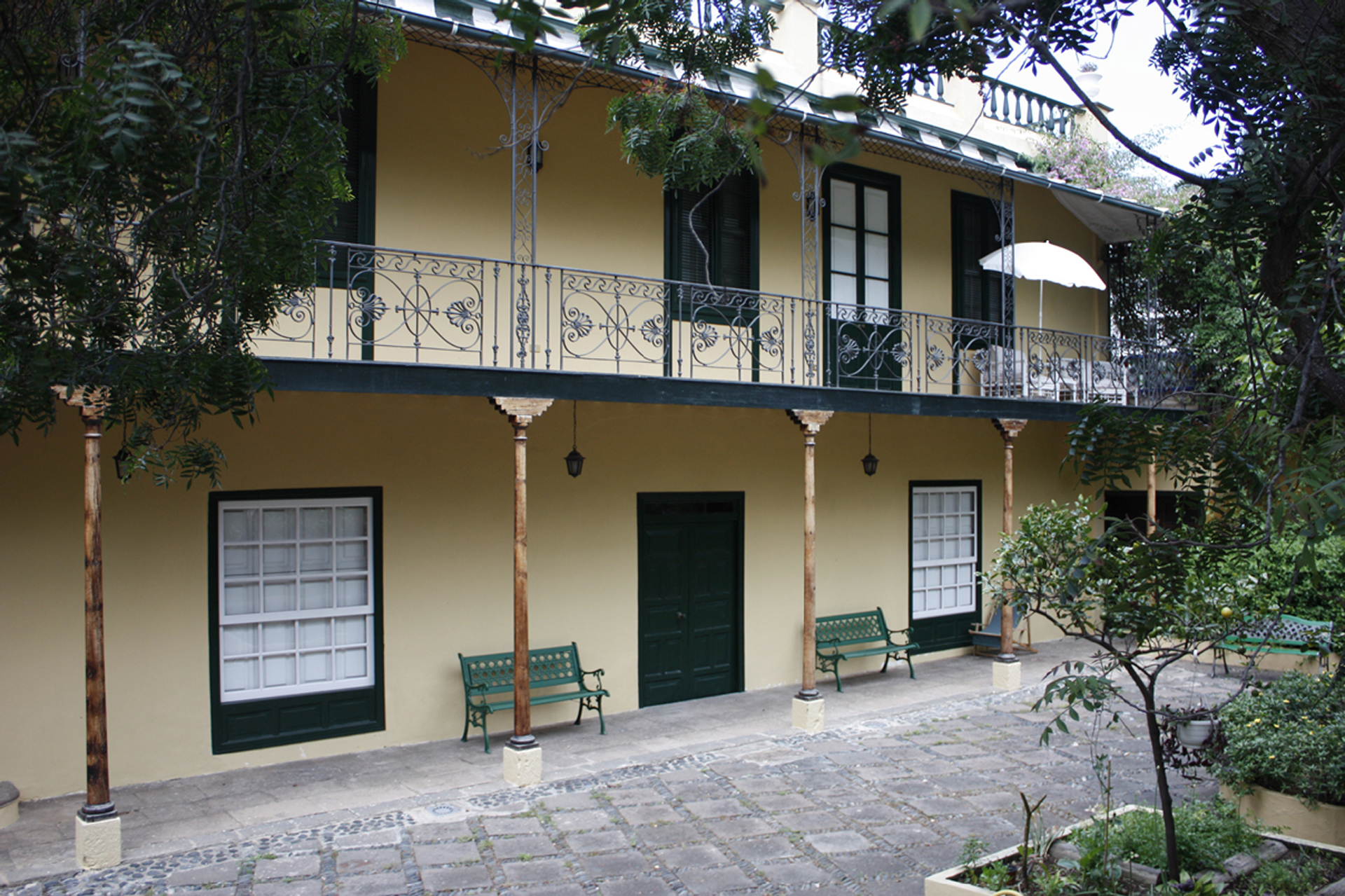
Before following the expedition into the mountains, there is a place in town where its story becomes tangible. The Sitio Litre house and garden have long been associated with visiting artists, writers and scientists. The Canary Islands' protected heritage description lists Piazzi Smyth among the distinguished visitors hosted there, though it does not date his stay.
Sitio Litre's garden is open to the public, while the historic house remains a private residence. A walk among its paths, orchids and dragon tree offers a gentle way to picture the social world of nineteenth-century Puerto. From the town, Smyth's work led upward to mountain camps where the actual observations were made. Our Sitio Litre garden guide covers the garden and its other visitors in more detail.
The link matters because Puerto de la Cruz was more than scenery below the expedition. It was a point of arrival, supplies and human connections in a much larger journey across Tenerife.
Jessie Duncan was part of the expedition
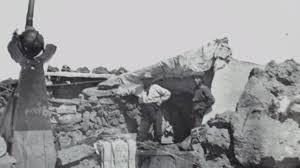
The trip was a shared undertaking. Jessie Duncan Piazzi Smyth accompanied Charles to Tenerife and worked alongside him in the astronomical observations, as the Royal Society's archive description makes clear. She also appears in one of the expedition's surviving photographs at the Guajara camp. Her presence is an important part of the story, rather than a footnote to a solitary man's adventure.
The couple had married the year before the expedition. They faced the journey, the mountain conditions and the work together. When looking at the images now, notice the people who made an observing station possible as well as the telescope: Jessie, local guides, sailors and those who transported the equipment.
Accounts of nineteenth-century science often place one name on the published paper. The photographs and archival description let us see more of the people behind it.
The first station: Guajara
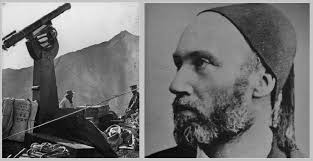
The expedition's first high station was on Mount Guajara, looking towards Teide. The Instituto de Astrofísica de Canarias describes the ascent in July 1856 with animals carrying the instruments and supplies. The larger telescope proved too heavy for that first climb and stayed in Puerto de la Cruz. At Guajara, the team worked with the smaller Sheepshanks telescope instead.
It is a vivid scene: a telescope set up on a mountain, tents and equipment around it, and an observer looking through a thinner layer of air than he could in Edinburgh. Smyth studied the Moon, planets and stars, while the team also paid close attention to atmospheric conditions. He wanted evidence from different heights, not simply a beautiful view of the night sky.
An original stereoscopic photograph of the telescope on Guajara survives. It shows the practical side of the experiment better than any modern artist's impression could: the small instrument, its mount and the exposed setting.
Higher again: Altavista on Teide
After weeks at Guajara, Charles and Jessie returned down to Puerto de la Cruz and planned a second ascent. According to the IAC's historical account, they adapted the heavier telescope so its parts could be carried up by the animals. Their next station was Altavista, higher on the slopes of Teide.
This gave the experiment the comparison it needed. Observing from more than one height helped them judge what changed as the air grew thinner. The IAC places Guajara at about 2,717 metres and Altavista at about 3,250 metres. The mountain weather and drifting dust were part of the challenge, so successful observations depended on conditions as well as altitude.
The expedition was not an easy, uninterrupted climb towards perfect skies. It involved moving equipment, testing what would work and trying again higher up. That persistence is what makes the story feel human nearly two centuries later.
What did the telescope show?
Smyth reported that the high stations gave him sharper views of astronomical objects than he had obtained with the same telescope in Edinburgh. His drawings of the Moon and Jupiter were part of a record that also considered stars and the atmosphere itself. The Royal Society preserves his illustrated Tenerife papers and explains how he used observations from Guajara and higher on Teide to examine the benefit of clearer mountain air.
The Instituto de Astrofísica de Canarias treats the 1856 expedition as an early demonstration of the advantages of high-altitude observing. Later scientists made many further studies before modern observatories developed in the Canary Islands. Smyth's result was a persuasive step in that history, not a claim that one expedition created today's observatories on its own.
For a visitor looking up at Teide from Puerto, the idea is easy to grasp: less disturbed air between a telescope and the sky can make details easier to see. The hard part was carrying the experiment high enough to find out.
The photographs that let us see the journey
Smyth was also an early photographer. His 1858 book, Teneriffe, an Astronomer's Experiment, told the story with 20 mounted stereoscopic photographic views. A stereoscopic pair shows slightly different views of the same subject; seen with a suitable viewer, the scene gains an impression of depth. The British Library describes this as the first published book to use original stereoscopic illustrations.
The pictures range beyond telescopes. They show the Guajara camp, the stations near Teide, volcanic ground and plants and places in the north of Tenerife. The Royal Society also holds watercolours and photographs from the expedition. These records are unusually immediate: they let us look at the instruments and terrain that Smyth and Jessie knew, instead of relying only on a later retelling.
The Rijksmuseum holds Smyth's view of the Sheepshanks telescope on Guajara, with Teide beyond it. Look at the instrument in the exposed landscape and the distance the team had travelled becomes easier to imagine.
Why his Tenerife journey is still remembered
The expedition brought together two stories that usually sit apart in a visitor guide: the social history of Puerto de la Cruz and the scientific history of Tenerife's mountains. Sitio Litre links Smyth to the town and to the people who welcomed travellers. Guajara and Altavista show what he and Jessie did after leaving its gardens behind.
The work mattered because it tested the value of placing a telescope high above much of the atmosphere. Its drawings and photographs also left a visual record of Tenerife in 1856. The IAC includes Smyth at the beginning of its account of astronomical exploration in the islands, while the Royal Society and British Library preserve the papers and images that make the journey accessible now.
You do not need to be an astronomer to enjoy the story. Next time Teide rises above the clouds on the horizon, think of two travellers looking for a clearer view of the sky and finding their way there with telescopes, cameras, guides and pack animals.
Follow the story in Puerto de la Cruz
Start with the Sitio Litre Orchid Garden, where the historic house is part of the setting and the garden can be visited. The house is private, so this is a place to feel the history of the town rather than tour a former observatory. You can also watch our historic gardens and plazas walk with Ramón Michán, which begins at Sitio Litre.
The Royal Society's Tenerife papers and the Rijksmuseum's Guajara telescope photograph bring the tents, instruments and mountain terrain closer than the landscape alone can today. The public garden and our video make a pleasant starting point for that larger story.
Follow PuertoDeLaCruz.info in Google
If our Puerto de la Cruz guides are useful to you, you can add PuertoDeLaCruz.info as one of your preferred sources in Google.