
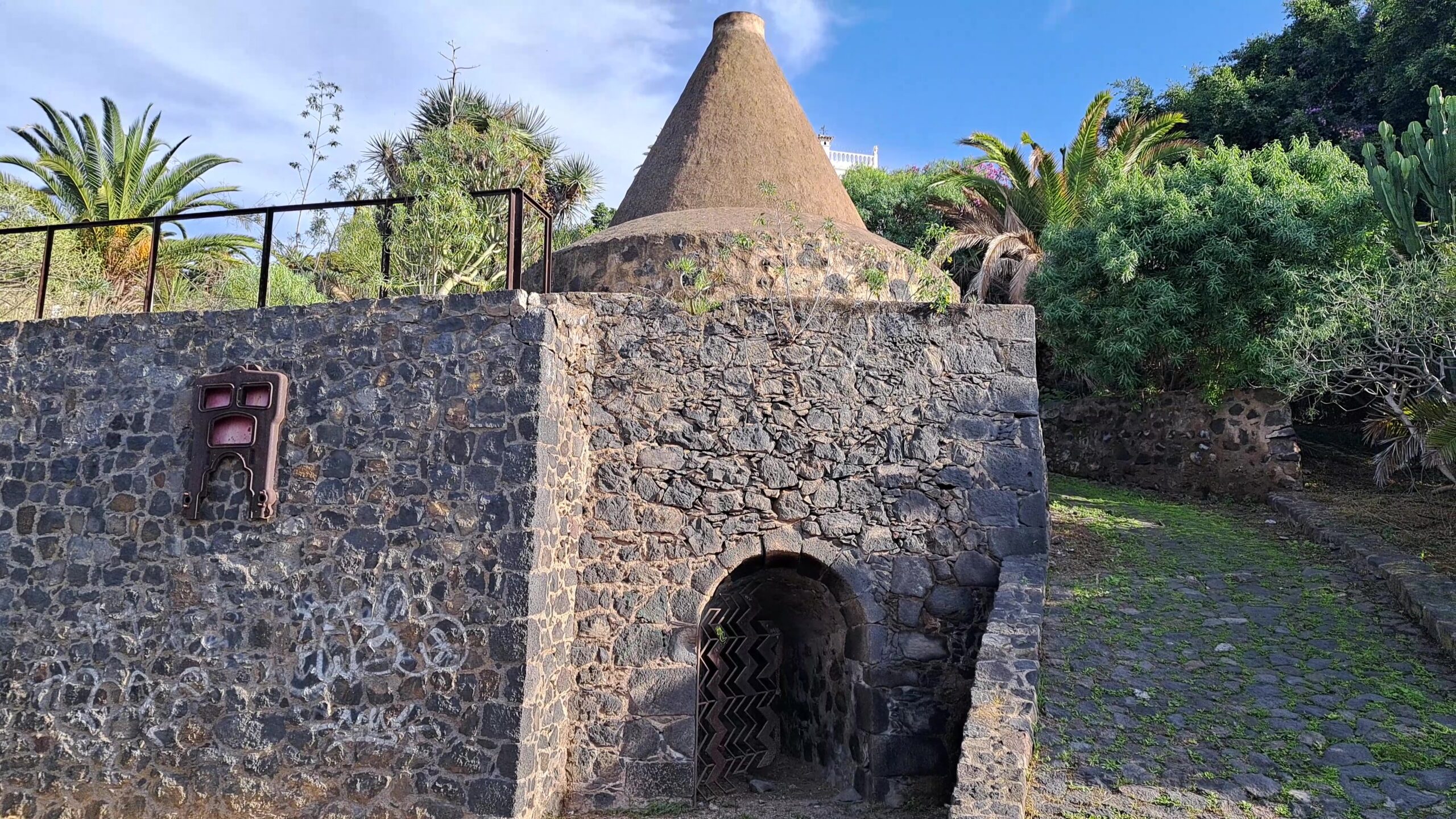
The Hornos de Cal at Las Cabezas are a group of four late nineteenth-century kilns in the upper part of Puerto de la Cruz. They produced lime and gypsum for building and preserve traces of the work, fuel and trade behind the town's older whitewashed buildings. The ensemble is protected as a Bien de Interés Cultural in the category of Sitio Etnológico. Look beyond the kiln shapes and you can also find the former coal room, water tanks and spaces used to store the finished materials.
Where are the Hornos de Cal and what remains?
Find the kilns in Las Cabezas, in the upper part of Puerto de la Cruz's built-up area. The municipal visitor listing gives the address as Calle Las Cabezas, 5. Although the setting is now surrounded by roads and later buildings, the protected site retains the industrial group in a landscaped space. It is a reminder that the town's history includes everyday manufacture as well as the port, plazas and grand houses.
There are four kilns, not one. Two large ones stand at the ends of the group, a domed kiln sits in the middle, and a smaller attached kiln was used for gypsum. The adjoining rooms and tanks help explain how the site worked as a whole. Our original film offers a closer look at the ensemble.
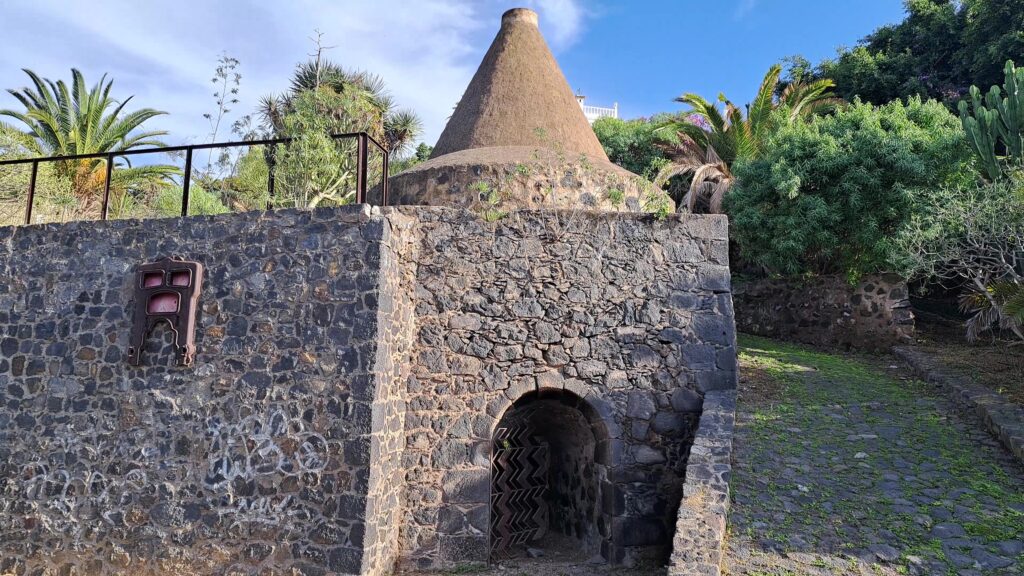
Built in the late nineteenth century
The official heritage declaration identifies Gregorio Barreto, a master mason, as the builder of the four kilns in the late nineteenth century. The two largest have square, block-like bases and upper forms shaped like truncated cones. Their masonry uses piedra molinera, while brick outlines the kiln openings.
The central kiln is different: its dome is made of refractory brick, with a clay covering. The heritage record says its design drew on models at the port of Santa Cruz de Tenerife. These differences are worth looking for on site; they turn what might appear to be a row of similar structures into a small record of building techniques.
Limestone, fuel and the finished lime
A municipal account says the limestone arrived by sea from Fuerteventura, landing at Puerto de la Cruz before it was fired. It also explains how the resulting lime was used: one grade for whitewashing walls and another for building finishes. This gives the white surfaces of the old town a connection to the people who supplied its materials.
The official heritage description records a change in fuel from heather wood to coal. The coal came from Gran Canaria in English sailing vessels and was kept in a room beside one of the large kilns. Water tanks and the cuarto de la calera, where lime was stored for sale and dispatch by the old Camino de Las Cabezas, complete the picture. The kilns were part of a chain of transport, firing, storage and local construction, rather than isolated monuments.
A separate gypsum kiln and a demanding shift
The smaller kiln attached to the central dome was intended for gypsum. Beside it stood a square storage room with a single-slope tiled roof. This explains why descriptions of the site mention both lime and plaster: they were different products made within the same industrial group.
The municipal heritage account says 14 men worked day and night and that a firing could produce up to 3,600 kilograms of lime. It places the end of production in 1940, attributing it to falling demand. Those figures are useful local detail, though the formal declaration does not independently give a workforce, batch yield or closure date.
Why are the Hornos de Cal protected?
The kilns preserve evidence of the trades and infrastructure that served Puerto de la Cruz. An official protection process began in 1983 under the proposed Monumento Histórico-Artístico designation. Its category was changed during the proceedings in 2007. The Government of Canarias finally declared Los Hornos de Cal a Bien de Interés Cultural, category Sitio Etnológico, by Decreto 31/2009 of 31 March 2009.
That precise designation matters. The older proposal and some visitor summaries use monument wording, but the final decree protects an ethnological site and defines a surrounding area. It covers the adjoining plot and the setting bounded by roads and the wall toward the school. The protection recognises the relationship between the kilns, their working spaces and an urban setting that has changed around them.
Seeing the kilns today
Go to Calle Las Cabezas, 5 to see the ensemble in Las Cabezas. From the surrounding public space, look for the two taller end kilns, the middle dome, the smaller gypsum kiln and the ancillary rooms. The structures and the site may be subject to conservation work or changes in access, so follow signs and barriers when you arrive. Check local information if you need to plan around entry arrangements.
For a wider introduction to the town, browse our History articles and walking guide.
Explore more of Puerto de la Cruz
Follow PuertoDeLaCruz.info in Google
If our Puerto de la Cruz guides are useful to you, you can add PuertoDeLaCruz.info as one of your preferred sources in Google.