

At the western side of central Puerto de la Cruz, El Peñón del Fraile rises above Calle Mequínez with a cross and a small six-column canopy on its summit. It is a volcanic landmark, a viewpoint and a place layered with local stories. The staircase and lookout were shaped by nineteenth-century public works, while its name remembers a friar who is said to have sought solitude on the rock centuries earlier.
What can you see at El Peñón del Fraile?
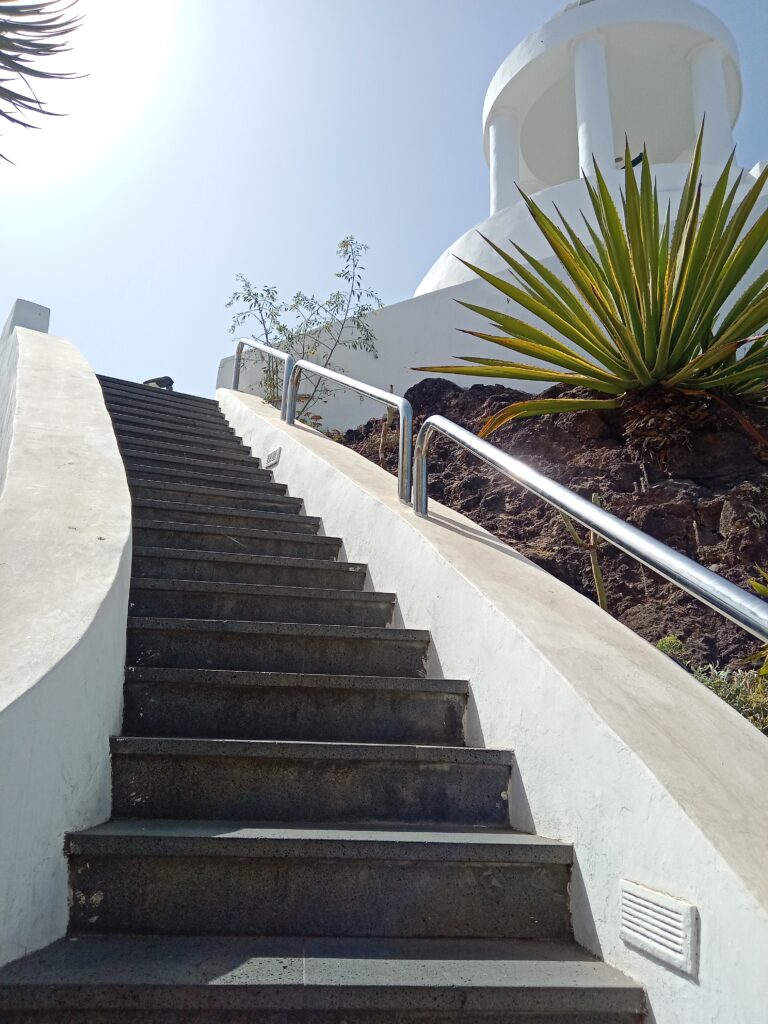
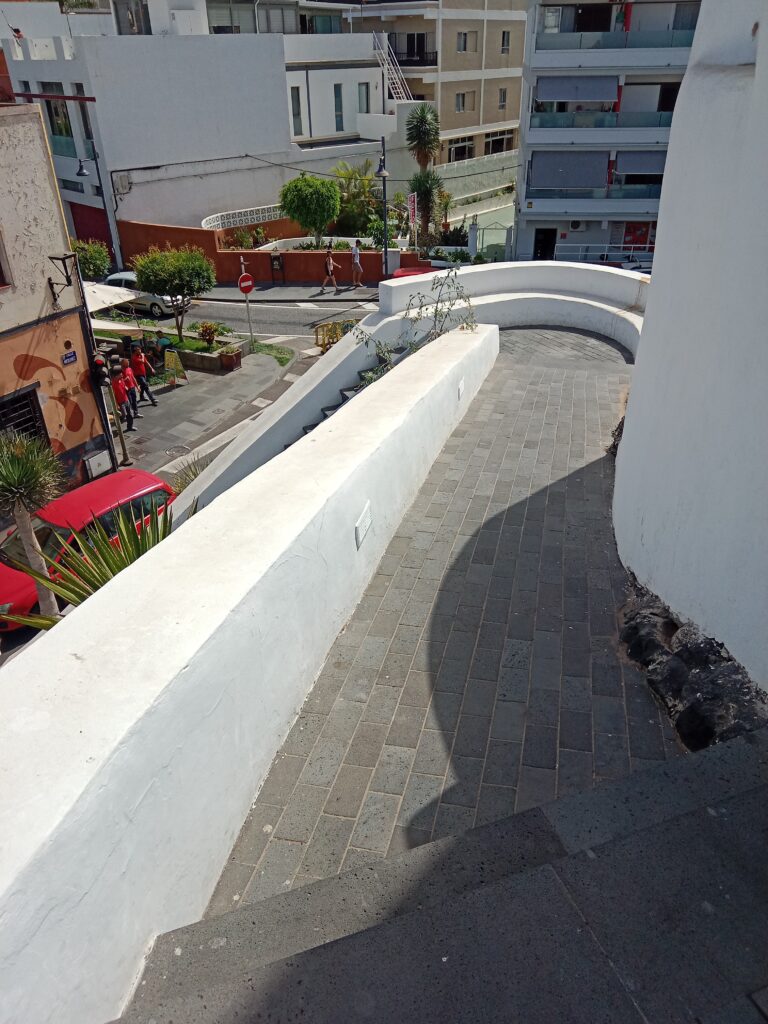
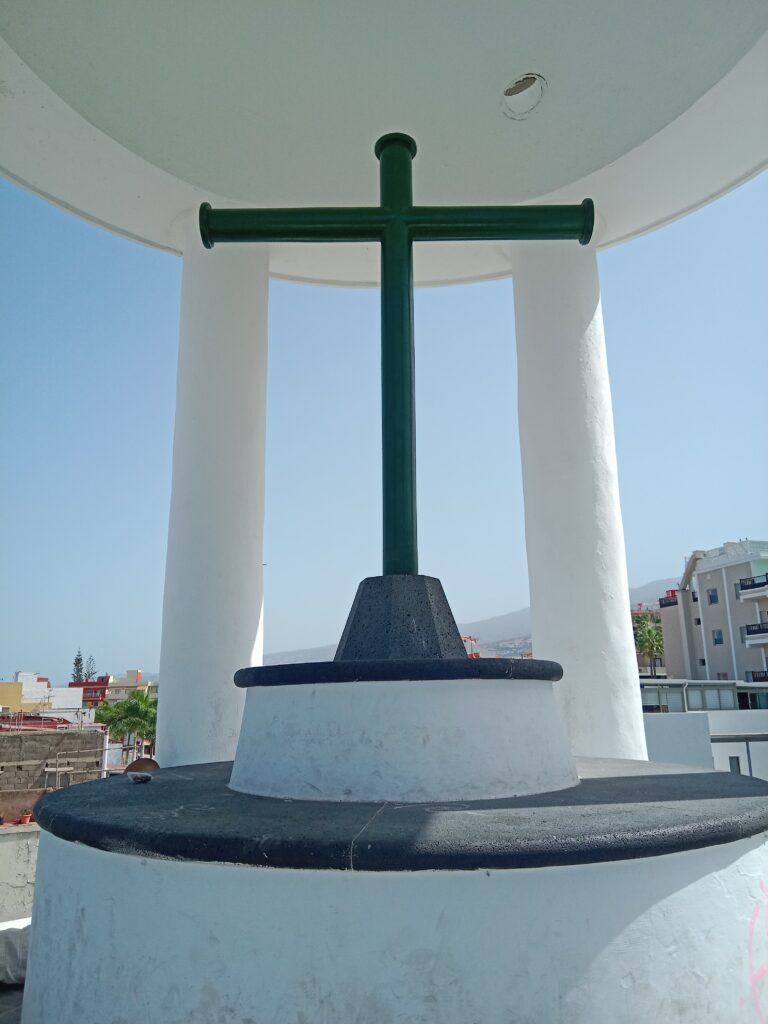
The great dark rock is easy to recognise from the streets around Calle Mequínez. Stone steps lead towards a small terrace, where a cross stands beneath a circular canopy supported by six columns. Together, the natural rock and the additions made by local people became one of Puerto de la Cruz's familiar landmarks. The municipal visitor guide identifies the site as a viewpoint over the coast.
Look at it first from street level: the height of the rock explains why it served as a retreat, a lookout and a memorable marker at the edge of the older town. The summit offers another perspective when the steps are accessible and suitable for you.

A volcanic rock with a debated date
El Peñón belongs to the volcanic landscape that shaped this stretch of Puerto de la Cruz. Older descriptions often say that it came from a 'Taoro volcano' eruption in 1430 and travelled to the shore in a lava flow. That precise account should be treated with care. A study of the town's geology, discussing the work of local geologist Telesforo Bravo, places the large blocks near San Felipe and Mequínez in an older volcanic phase; it describes the traditionally dated 1430 event as a later phase that changed other parts of the coastline.
The rock's volcanic origin is central to the story. Its exact age and journey should not be presented as a settled 1430 fact. The coastline and built ground around it have also changed, which helps explain why this once more isolated rock now sits within the town.
Why is it called the Friar's Rock?
Local histories connect the name with Fray Juan de Jesús, a seventeenth-century religious figure from Icod de los Vinos. He is remembered for climbing the rock to pray and withdraw from the activity of the port. The place was then described as quieter and more remote than the streets around it today.
A much-loved story says that he tied two dry verode stems together as a cross and that they later flowered. The municipality tells it as a local tradition rather than a documented event. The later large cross on the lookout belongs to a separate chapter of the site's history.
Luis Lavaggi's staircase and public walk
In 1814, according to the municipal visitor account, the Genoese merchant Luis Lavaggi had the rock improved with a stone staircase, a small circular terrace and a cross. The lookout was part of a wider effort to make this part of the coast a place people could walk and enjoy. The nearby Paseo Luis Lavaggi still recalls his name.
The town chronicler José Agustín Álvarez Rixo described Lavaggi's spending on these public works and recorded the municipality's thanks. His account makes the staircase more than a picturesque detail: it shows how a natural outcrop became a deliberately made public viewpoint in the early nineteenth century. The cross and terrace preceded the canopy visitors see today.
The six-column canopy and May celebrations
The canopy came later. A local inventory of Puerto de la Cruz's crosses cites Álvarez Rixo's record of a six-column structure begun in 1855, with its roof completed in 1860. That sequence explains why a date for Lavaggi's staircase cannot also be the date of the whole monument. The lookout has been restored since, including work to its dome in the early 2000s.
The rock was also a social place. The municipal account recalls May festivities around it, with ring races and dancing; fabric could be hung around the canopy so that it looked like a small chapel. These details show the Peñón as part of local civic and festive life as well as a viewpoint. They describe past celebrations, not a fixed present-day programme.
A darker part of the local story
The Centro de Iniciativas y Turismo also records that the Peñón witnessed executions. Some retellings call them the last executions by garrotte in Spain, but that is incorrect: the method was used elsewhere in Spain in 1974. The local association is part of the site's history without the unsupported national 'last'.
Another tale places the treasure of the pirate Caraperro in a crack in the rock. As with the flowering cross, this is local folklore rather than documented history.
Visiting El Peñón del Fraile
Find the Peñón on Calle Mequínez, near the western edge of La Ranilla. You can appreciate the rock and canopy from below even if you do not climb the stone steps. If you go up, take care on the steps and follow any current access signs; conditions can change and the municipal listing does not give a fixed visiting schedule.
The Peñón makes a natural pause on a walk towards the coast and the area around Playa Jardín. For ideas beyond this stop, use our Walking in Puerto de la Cruz guide.
Continue exploring the old town and coast
Follow PuertoDeLaCruz.info in Google
If our Puerto de la Cruz guides are useful to you, you can add PuertoDeLaCruz.info as one of your preferred sources in Google.