Solar Eclipse and Perseids in Puerto de la Cruz – 12 August 2026
Wednesday 12 August 2026 will be an exceptional day for skywatchers in Puerto de la Cruz and across Tenerife, with two major astronomical events taking place within hours of each other.
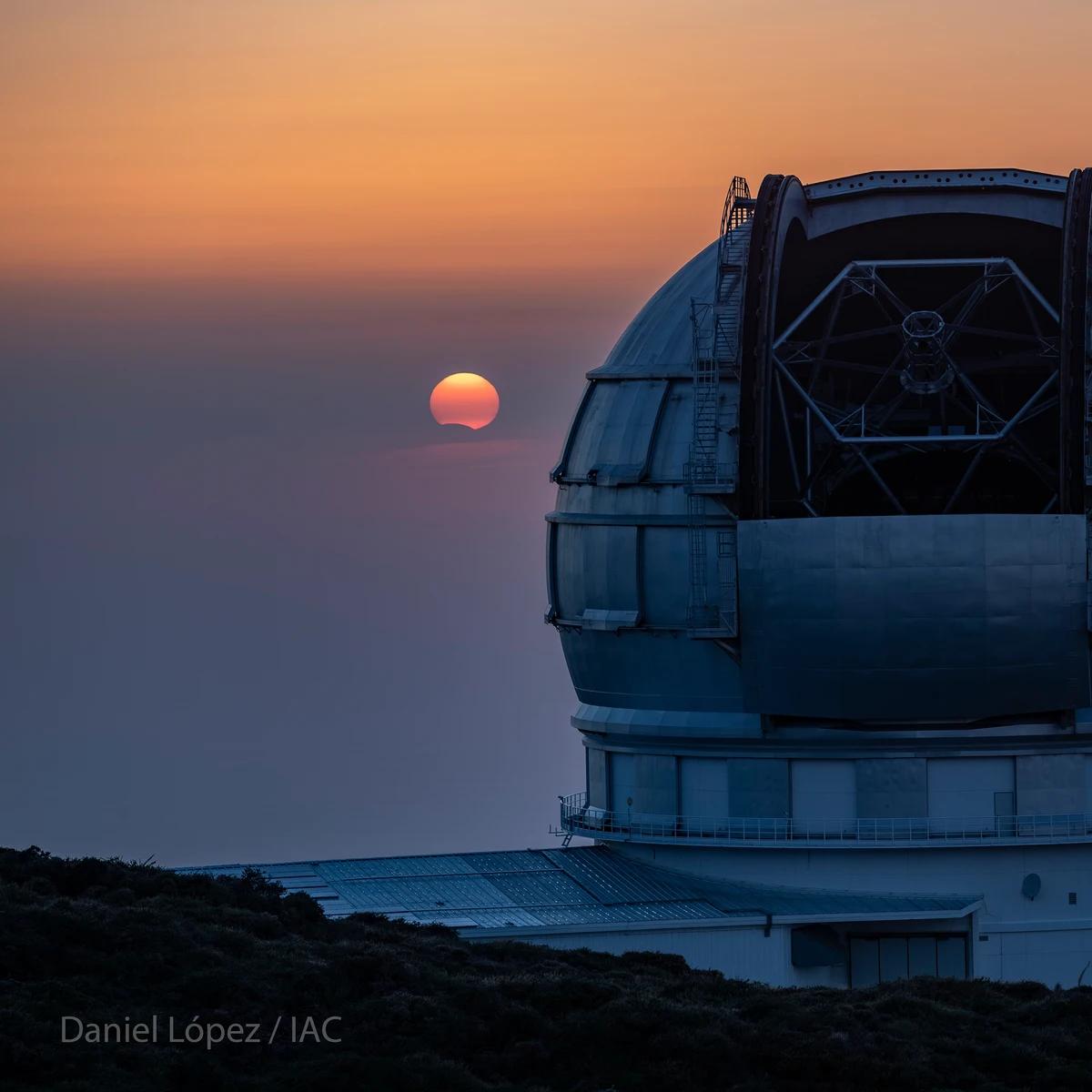
During the early evening, Tenerife will experience a partial solar eclipse, with around 70% of the Sun covered at maximum. Later that night, the Perseid meteor shower reaches its main period of activity.
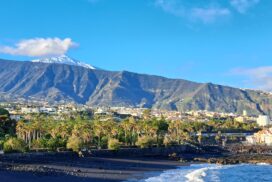
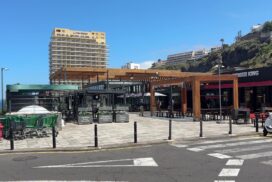
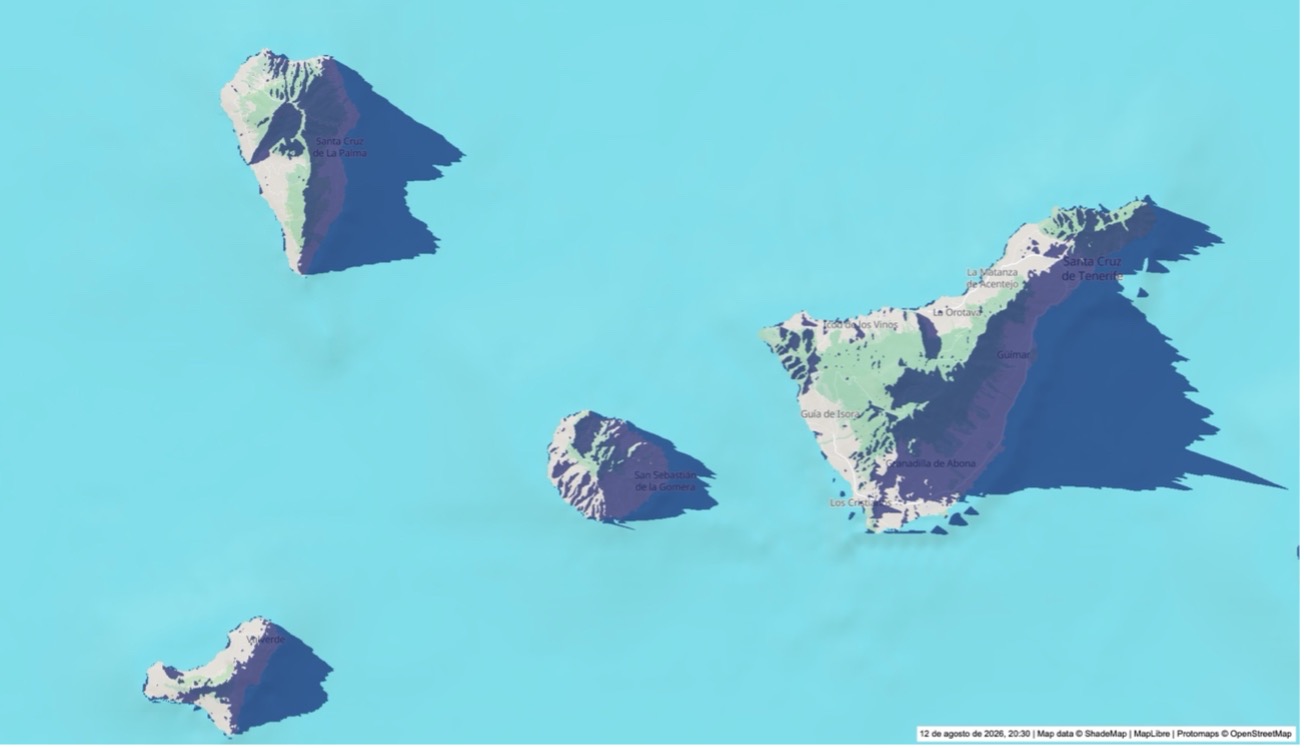
Puerto de la Cruz is particularly well placed for the eclipse because the Sun will be very low in the western sky as the event reaches its maximum. The Ayuntamiento de Puerto de la Cruz has highlighted the town as one of the better places in Tenerife from which to watch the eclipse.
Solar eclipse times in Tenerife
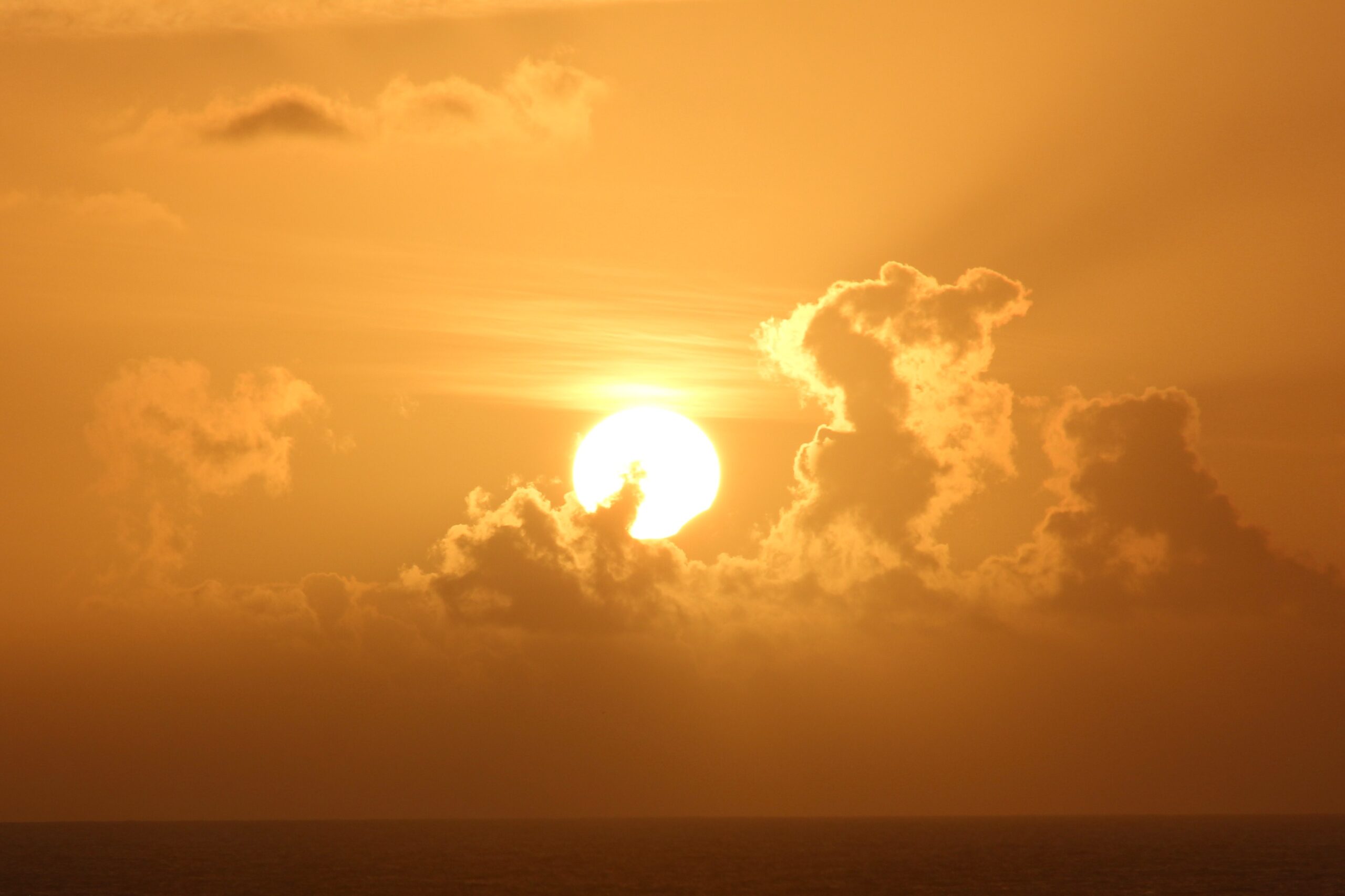
The solar eclipse will take place during the evening of Wednesday 12 August 2026.
According to the Instituto de Astrofísica de Canarias, the approximate times for the province of Santa Cruz de Tenerife are:
- Eclipse begins: around 6:58pm
- Maximum eclipse: around 7:53pm
- Sunset: around 8:45pm
The eclipse will remain partial in the Canary Islands. Tenerife is not inside the path of totality, so the Sun will never be completely covered here.
At maximum, approximately 70% of the Sun will be obscured.
Watching the eclipse from Puerto de la Cruz
Puerto de la Cruz has an important advantage for this eclipse: its outlook towards the western and north-western horizon.
The Sun will be very low in the sky as the eclipse develops, so a clear view towards the west-north-west will be essential. Mountains, buildings or other obstacles on the horizon could block the Sun before the eclipse has finished.
The official Puerto de la Cruz municipal channels have identified the town as one of the better locations in Tenerife for watching the eclipse on 12 August.
Wherever you choose to watch from, look for an open location with an unobstructed view towards the setting Sun rather than a place enclosed by buildings or terrain.
Important: how to watch the eclipse safely
Never look directly at the Sun without proper solar viewing protection.
This is especially important in Tenerife because the eclipse will remain partial throughout. There will be no period when it is safe to look directly at the Sun with unprotected eyes.
- Use only eclipse glasses certified to EN ISO 12312-2:2015.
- Ordinary sunglasses are not safe for eclipse viewing.
- Do not use smoked glass, CDs, photographic film, X-rays or homemade filters.
- Check eclipse glasses for scratches, holes, cracks or other damage before using them.
- Put eclipse glasses on before looking towards the Sun and turn away before removing them.
- Children should be closely supervised when using eclipse glasses.
Even a small visible part of the Sun can cause permanent eye damage. Solar retinal damage can occur without pain and symptoms may not appear until hours or days later.
Cameras, binoculars and telescopes
Never look at the Sun through binoculars, a telescope or a camera unless the equipment has a proper professional solar filter fitted to the front of the instrument.
Optical equipment concentrates sunlight and can cause severe eye damage almost instantly.
Eclipse glasses worn over your eyes are not sufficient protection when looking through binoculars or a telescope.
For families and groups, one of the safest alternatives is to watch the eclipse indirectly using a simple projection method rather than looking directly at the Sun.
The Perseid meteor shower on 12–13 August
Once the Sun has set and the eclipse is over, attention turns to the Perseid meteor shower.
The Perseids are one of the best-known annual meteor showers and are produced as the Earth passes through material left behind by comet 109P/Swift-Tuttle.
In 2026, the main maximum is expected during the night of 12 to 13 August.
For the Canary Islands, the strongest period is expected in the early hours of Thursday 13 August. The official Spanish astronomy service places the peak between 4:00am and 6:00am mainland Spanish time, equivalent to approximately 3:00am to 5:00am in the Canary Islands.
Conditions are particularly favourable this year because a new Moon occurs on 12 August, meaning there should be very little moonlight interfering with the darker night sky.
Where to watch the Perseids in Tenerife
Unlike the eclipse, the Perseids do not require special eye protection.
For the best chance of seeing meteors, find somewhere with:
- A dark sky
- As little artificial light as possible
- A wide, unobstructed view of the sky
- Enough time for your eyes to adjust to the darkness
You do not need binoculars or a telescope. In fact, the Perseids are best watched with the naked eye because meteors can appear anywhere across a wide area of sky.
Puerto de la Cruz is convenient for the eclipse, but darker areas away from the town's street lighting will generally provide better conditions for watching the meteor shower later in the night.
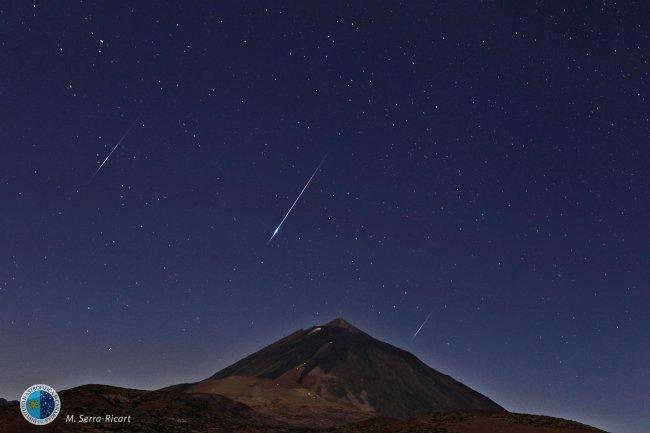
Important Teide access restrictions on 12 and 13 August
Do not assume you will be able to drive a private car up to Teide to watch the eclipse or Perseids.
The Cabildo de Tenerife has introduced a special traffic operation for 12 and 13 August 2026 because very large numbers of people are expected to travel towards Teide for the eclipse and meteor shower.
Private vehicle access to the Teide National Park and surrounding forest zone will be restricted between:
5:00pm and 5:00am on both nights.
Controls will operate on the main approaches:
- TF-21 from La Orotava
- TF-24 from La Esperanza
- TF-38 from Chío
- TF-21 from Vilaflor
There are exemptions for certain authorised vehicles, public transport, emergency services, essential workers, some larger organised transport services and people staying in accommodation inside the affected area.
Special public transport towards Teide
TITSA will operate special public transport services during the restrictions as an alternative to private cars.
The announced services will run from:
- La Orotava via the TF-21
- La Esperanza via the TF-24
- Vilaflor via the TF-21
The special service is expected to operate between approximately 7:30pm and 2:30am.
If you are considering travelling towards Teide, check the latest TITSA and Cabildo information before leaving, as traffic management may be adjusted depending on conditions and visitor numbers.
How to plan 12 August in Puerto de la Cruz
A simple way to experience both astronomical events is to treat them as two separate parts of the evening.
Early evening: the eclipse
Be in position before the eclipse begins at around 6:58pm, with a clear view towards the west-north-west. Maximum eclipse is expected at around 7:53pm.
Use certified solar eclipse glasses throughout.
After dark: the Perseids
After sunset, move to the darkest safe location available to you and allow time for your eyes to adjust to the darkness.
The meteor shower can be seen throughout the night, but the strongest activity is expected during the early hours of 13 August.
If you plan to travel into the higher parts of Tenerife, remember that the special Teide access restrictions will already be in force from 5:00pm.
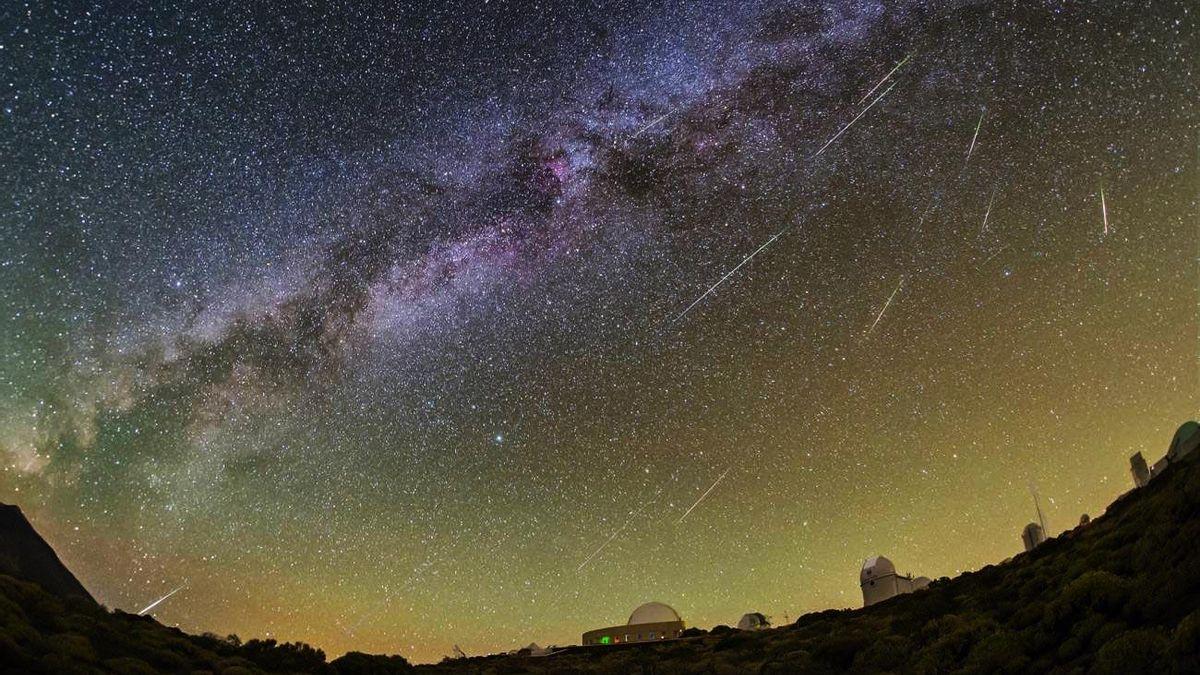
Final eclipse safety reminder
Tenerife will only experience a partial eclipse on 12 August.
That means there is no safe moment to look directly at the Sun without certified solar viewing protection.
Use properly certified EN ISO 12312-2:2015 eclipse glasses or an indirect projection method, and never use ordinary sunglasses or unfiltered optical equipment.
With the correct protection and a clear western horizon, Puerto de la Cruz should offer an excellent opportunity to experience the eclipse before the Perseids take over the night sky.
Frequently asked questions
Can you see the solar eclipse from Puerto de la Cruz?
Yes. Puerto de la Cruz is being promoted by the Ayuntamiento as one of the better places in Tenerife to watch the partial eclipse on 12 August 2026.
What time is the eclipse in Tenerife?
The eclipse is expected to begin at around 6:58pm, with maximum eclipse around 7:53pm. It continues towards sunset.
Will the eclipse be total in Tenerife?
No. Tenerife will experience a partial eclipse, with around 70% of the Sun covered at maximum.
Can I look at the eclipse with sunglasses?
No. Ordinary sunglasses are not safe. Use certified EN ISO 12312-2:2015 solar eclipse glasses.
Can I take a photo of the eclipse with my camera?
A camera aimed at the Sun requires a suitable professional solar filter fitted correctly to the front of the optical system. Never look through an unfiltered camera, telescope or binoculars.
When are the Perseids strongest in Tenerife?
The main maximum is expected during the early hours of 13 August, with particularly strong activity around approximately 3:00am to 5:00am Canary Islands time.
Can I drive to Teide to watch the eclipse or Perseids?
Private vehicle access will be restricted between 5:00pm and 5:00am on 12 and 13 August, with exceptions for authorised vehicles and certain services.